DIY craft toys turn ordinary materials into shared projects. A cardboard box can become a puppet theater. Paper tubes, yarn, and washable paint may become a tiny village. These activities offer more than something to display. They give family members a reason to sit together, exchange ideas, and make decisions as a team.
Parents often ask, how do DIY craft toys promote family interaction? The answer is practical: making something together creates natural moments for conversation and cooperation. A child might choose the colors, while an adult helps cut shapes or steady a wobbly piece. Older siblings can show younger ones how to fold paper or thread beads. Small roles matter. So does listening.
The experience is not always tidy. Glue gets on the table, and a project may look different from the plan. That can be frustrating, but it also gives families a chance to adapt and laugh. Not every craft will become a favorite. That is worth remembering. Choose age-appropriate materials, supervise tools, and let children make choices where they can. The goal is not a perfect result; it is a safe, welcoming activity that suits the people taking part.
The ideas ahead explore ten ways DIY craft toys can bring families closer, from building a simple game to inventing characters for a homemade story. Each offers a starting point, not a strict recipe. Use what you have, keep expectations realistic, and leave room for everyone’s ideas.
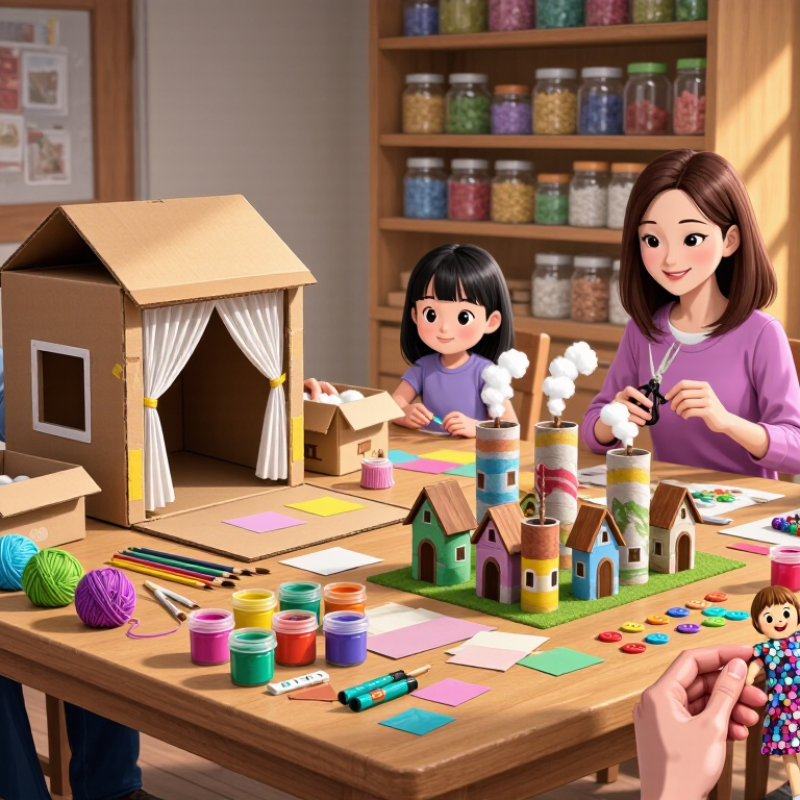
DDIY craft toys are playthings families make or personalize with simple materials, such as cardboard, paper, yarn, and washable paint. A shoebox can become a puppet stage; paper tubes might turn into a marble run. Unlike a finished toy, a homemade one often changes as children test ideas and add details. Keep small parts away from very young children, and choose materials suited to their ages.
Making the toy together gives each family member a way to contribute. One person can sketch a plan, another can cut large shapes, and a child can choose colors or decorate. At the kitchen table, these small jobs invite conversation without requiring everyone to be an expert. Try building a cardboard animal, then ask each person to invent one feature. It may wobble. That is the point. Fixing a weak flap or changing a too-tight opening can become part of the play.
Not every craft session feels harmonious. Children may disagree about colors, and adults can take over without noticing. Pause, offer choices, and let the child’s idea remain visible, even when the result looks uneven. A little mess is normal; a clear workspace and a few shared rules help. The finished toy matters, but the time spent planning, making, and trying it together is what encourages family participation.
DIY craft toys bring families together, but a fun idea can become frustrating when materials do not suit a child. Check age guidance before starting, and inspect pieces for sharp edges or loose parts. Small details matter. Choose sturdy, washable supplies labeled for craft use, and follow their instructions. Keep beads, buttons, and other tiny pieces away from children who may put objects in their mouths.
Match the project to the child’s skills and attention span. Younger children may enjoy large cardboard shapes, chunky crayons, and pre-cut paper. Older children can try simple stitching with blunt needles or build toys from clean boxes and paper tubes. Use age-appropriate scissors, and stay close whenever tools, glue, or small components are involved. A project should invite participation, not leave one person doing all the tricky work.
It is tempting to choose the most impressive-looking craft. A simpler one often works better. Let children pick colors or decide how a cardboard puppet moves; those choices make the result feel theirs. I would also leave room for a little mess, while keeping food and drinks away from the work area. Not every project goes smoothly. Pause if a material smells unusual, sheds fibers, or causes irritation, and choose another option.
| No. | DIY Toy Project | How It Brings Families Together | Suggested Age and Roles | Safer Material Choices | Safety and Suitability Checks |
|---|---|---|---|---|---|
| 1 | Cardboard town or playhouse | Family members can plan the layout, decorate different buildings, and invent stories or games together. | About ages 4+ with adult help; adults handle cutting, while children can draw and decorate. | Clean, dry cardboard; washable markers; water-based paint; paper tape. | Check boxes for sharp staples and damaged edges. Use scissors or craft knives only with age-appropriate adult supervision. Make sure the structure is stable and has adequate ventilation if children play inside it. |
| 2 | Paper-bag or paper-plate puppets | Everyone can create a character, then take turns telling a story or putting on a short puppet show. | About ages 3+ with supervision; younger children can choose colors and help with large, easy-to-handle pieces. | Plain paper bags or plates; crayons; washable markers; glue sticks; large paper shapes. | Avoid loose small decorations for children under 3. Adults should supervise scissors and check that glued pieces are firmly attached before play. |
| 3 | Family-designed board game | Family members can make the theme, draw the path, and agree on rules, encouraging cooperation and conversation. | About ages 5+; adults can help younger children with writing, counting, and rule-making. | Cardboard or thick paper; crayons or markers; large homemade playing pieces. | Keep pieces large enough not to pose a choking hazard for young children. Use simple rules suited to players’ ages, and supervise any cutting. |
| 4 | Decorated paper crowns or masks | Each person can choose a design, help measure the fit, and join a family pretend-play activity afterward. | About ages 4+ with adult help; adults should prepare openings and adjust fit. | Flexible paper or lightweight card; washable coloring materials; paper tape. | Do not cover the eyes or obstruct breathing. Avoid staples, sharp wire, and long cords. Ensure masks have clear, comfortable openings and are used with supervision. |
| 5 | Fabric or felt matching game | Family members can choose matching images, make pairs, and play together once the pieces are ready. | About ages 4+; an adult should cut fabric, while children can help select colors and patterns. | Clean fabric or felt; fabric markers used as directed; large, securely sewn or bonded shapes. | Small felt pieces and loose embellishments can be choking hazards. Keep them away from children under 3, and check seams and attachments regularly. |
| 6 | Recycled-container shaker | Family members can decorate instruments and play a simple rhythm together. | About ages 4+ with close adult supervision; adults should assemble and seal the container. | Clean, sturdy container with smooth edges; non-toxic, washable decorations; a securely fixed lid. | Do not use containers that held chemicals or medicines. Filling materials can be choking hazards: the container must be securely closed, checked for damage, and kept away from children who may mouth it. |
| 7 | Cardboard marble or ball run | Family members can design the route, test it, and solve problems together when a ball gets stuck. | About ages 6+ with adult supervision; adults should handle sharp cutting tools. | Clean cardboard tubes and boxes; paper tape; a large, age-appropriate ball. | Marbles are choking hazards and are unsuitable around young children. Choose a ball too large to swallow, keep the track stable, and supervise play. |
| 8 | Nature-and-paper collage cards | Family members can collect suitable fallen items together, share ideas, and make a collaborative picture or set of cards. | About ages 4+ with supervision; adults should guide collection and handle any cutting. | Paper; clean fallen leaves or flowers; washable glue; crayons. | Use only familiar, clean materials collected with permission. Avoid unknown plants, berries, mushrooms, and items from roadsides or treated areas. Wash hands after collecting. |
| 9 | Large-piece paper jigsaw puzzle | Family members can draw a shared picture, turn it into large pieces, and work together to complete it. | About ages 4+; adults can cut the pieces, with the number and shape of pieces matched to the child’s skills. | Thick paper or clean cardboard; crayons or markers; blunt-tip scissors for supervised use. | Make pieces large for younger children and check for sharp or frayed edges. Do not leave small puzzle pieces within reach of children under 3. |
| 10 | Soft fabric beanbag target game | Family members can decorate targets, take turns tossing, and adapt the rules for different abilities. | About ages 5+ with adult supervision; adults should sew and fill the bags. | Washable fabric; secure stitching; a soft, non-toxic filling contained inside the bag. | Check stitching often so filling cannot escape. Keep beanbags away from children who may put them in their mouths, and toss them only toward a safe, clear target. |
A cardboard ramp, blunt scissors, and a handful of wooden wheels can turn an ordinary afternoon into a shared design challenge. One person measures; another tests whether the toy rolls straight. These small jobs build fine-motor control, planning, and early problem-solving through practice. The 2018 Play Well report, based on 13,000 parents across nine countries, found that 95% considered play important to children’s happiness. That figure reflects parents’ views, not proof that every craft activity produces the same results. Still, it points to how strongly families value playful time together.
Making toys also gives children room to explain ideas and negotiate changes. “The roof needs to be taller” becomes a real design decision when the box keeps tipping over. Adults can model safe tool use and ask open questions, rather than fixing every mistake. Let the crooked wheels stay. That matters. A toy that wobbles may invite more testing than a perfect one. Sometimes the adult takes over, or the project ends in scraps. It happens. Pausing to ask, “What would you change?” can return the problem to the child and keep creativity shared. Families can save a sketch or a photo, then revisit what worked next time.
How making toys together builds skills and shared creativity
Each bar counts how many of five skill areas a project naturally invites families to practice: planning, fine motor skills, problem-solving, collaboration, and creativity. This is an activity-design checklist, not a measurement of learning outcomes.
Top 10 Ways DIY Craft Toys Bring Families Together
Collaborative crafting can turn a rainy afternoon into a small lesson in listening. While building a cardboard marble run, one child may want a steep ramp, while another prefers a slower path. Families can pause, explain their ideas, and test both designs. That simple exchange gives everyone a chance to speak and be heard. It also builds trust: children see that their suggestions can shape the finished toy. The result may wobble. That is part of the fun.
Tips: Give each person a small role, such as cutting paper, choosing colors, or testing the toy. Ask, “What should we try next?” before offering your own fix. Keep tools and steps suitable for the children’s ages, and allow time for mistakes.
Crafting together is not always peaceful. Someone may take over, or a plan may fall apart when the tape loosens. Rather than rushing to repair everything, invite the group to decide what to change. A calm response can show children that disagreement does not end cooperation. Still, adults may need to step back and notice when a child wants help—or simply wants to try alone. The best shared project is not perfect; it leaves room for each person’s ideas.
A finished craft toy can become more than a project; it can become a familiar character in family life. A cardboard boat might sail across the bathtub, then return each weekend for another voyage. The American Academy of Pediatrics’ 2018 clinical report connects play with children’s language, social-emotional skills, and executive function. A handmade toy gives families a simple prop for practicing those skills together. Children can invent the story. Adults can follow their lead, even when the plot makes little sense.
Repeated play often grows into a family tradition: a yearly puppet show, or a small wooden creature that appears at every birthday. The U.S. Bureau of Labor Statistics’ 2023 American Time Use Survey reports that adults living with children under six spent an average of 2.4 hours daily on primary childcare. A short, repeatable play ritual can fit into ordinary routines. It may also take patience. Glue loosens; painted faces look a little lopsided. That imperfection can become part of the toy’s story.
Tips: Give the finished toy a place children can reach, and let them decide what happens next. Take a quick photo after each new adventure; the changing stories can become a family record. If interest fades, try changing one detail rather than making a whole new toy.
Measuring cardboard, turning wooden wheels, and testing a ramp can practice fine-motor control, planning, and problem-solving. Small jobs matter.
Children can explain ideas, listen to others, and suggest changes. Asking, “What should we try next?” gives them room to contribute.
Treat the wobble as a chance to test the design. Ask what the child would change before offering a fix.
Give each person a clear role, such as choosing colors, cutting paper, or testing the toy. Keep tasks suitable for each child’s age.
No. Tape may loosen, someone may take over, or the plan may fall apart. That happens.
Pause and let everyone explain their ideas. The family might test both a steep ramp and a slower one.
Not necessarily. A crooked wheel can invite more testing, though a child may sometimes want help—or prefer to try alone.
Save a sketch or take a photo. Later, compare it with the toy and notice what worked, even if the result feels unfinished.
A 2018 report found that 95% of surveyed parents considered play important to children’s happiness. It reflects parents’ views, not proof that every craft activity has the same effect.
DIY craft toys are simple playthings families make together using safe, age-appropriate materials and projects suited to everyone’s abilities. From choosing supplies to deciding what to create, each step gives family members a chance to contribute ideas and make choices. How do DIY craft toys promote family interaction? They turn a shared activity into an opportunity to talk, listen, solve problems, and encourage one another.
Working together can develop practical skills, patience, and creativity while helping children and adults appreciate each other’s strengths. Collaborative crafting also builds communication and trust as family members share tasks, work through challenges, and celebrate their progress. Once finished, handmade toys can inspire imaginative play and become part of family routines, special occasions, or lasting traditions. In this way, the value of a DIY toy goes beyond the finished object: it includes the time, teamwork, and memories created along the way.

JKit Toys