DIY craft toys look harmless: colored beads, wooden sticks, soft clay, and a small bottle of glue. Yet each material can create a different safety risk. Small parts may cause choking, pigments may contain restricted chemicals, and thin cords can create strangulation hazards. The U.S. Consumer Product Safety Commission’s Toy-Related Deaths and Injuries report recorded approximately 231,000 emergency-department-treated toy injuries in 2023. Its findings show why attractive packaging cannot replace documented testing.
This article examines how to ensure DIY craft toys meet international safety standards through practical, evidence-based controls. The European Commission’s 2023 Safety Gate report again identified toys among frequently notified dangerous products. ASTM F963, EN 71, ISO 8124, CPSIA, and REACH may apply, depending on the market and product design. Requirements differ. A craft kit sold in California may need different documentation from one sold in the European Union. Manufacturers should identify the destination market, assess every component, and use an ISO/IEC 17025-accredited laboratory for relevant tests. Check the wet paint, not only the finished box. Keep supplier declarations and batch records.
Steve Pasierb, president and CEO of The Toy Association, states, “Toy safety is a shared responsibility.” That principle matters for designers, factories, importers, and parents. Still, no checklist is flawless. DIY materials can change between batches, and home assembly introduces unpredictable misuse. Therefore, risk assessment should continue after launch, supported by complaint monitoring, sample retesting, clear age grading, and honest instructions. Certification helps, but careful judgment remains essential.
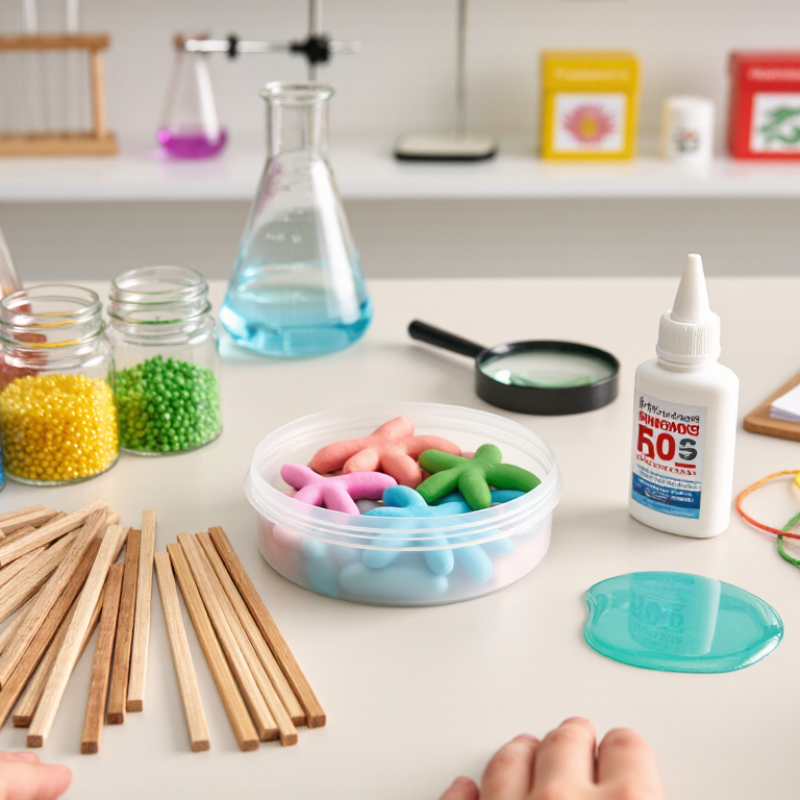
How to Ensure DIY Craft Toys Meet Global Safety Standards?
Defining safety requirements should begin with the child, not the finished product. Set a clear age range based on motor skills, supervision needs, and possible misuse. Small parts require special attention because curious children may place them in their mouths. Sharp edges, brittle pieces, loose magnets, and long cords should be removed or redesigned.
Choose materials with documented safety information and controlled chemical content. Paints, adhesives, plastics, and fabrics should suit the intended age group. Check for heavy metals, harmful migration, flammability, and skin irritation risks. Every component needs a traceable supplier record. It helps during testing and later investigations. Do not rely only on supplier statements.
Use physical tests that reflect real play. Drop the assembled toy, pull attached parts, twist handles, and repeat these actions. Test the packaging too. It can create choking or suffocation risks. Instructions should show safe assembly, storage, cleaning, and adult supervision. Warning labels must be visible and understandable for the target market.
A checklist is not enough. Real children use toys in surprising ways. Independent laboratories can compare the product with applicable international requirements, such as rules covering mechanical, chemical, and flammability safety. Keep test reports, design changes, batch records, and corrective actions together. One weak assumption can undermine good work. Recheck the design after every material or component change.
The chart shows commonly cited EN 71-3:2013 Category III migration limits for selected elements in scraped-off toy materials. Values are expressed in mg/kg and should be verified against the latest applicable standard and destination-market requirements.
A complete DIY craft toy safety assessment should also cover age grading, small parts, sharp edges and points, mechanical strength, flammability, accessible chemicals, instructions, warnings, traceability, and documented laboratory testing. Use only materials with verified composition and retain supplier and test records.
DIY craft toys should not be judged by appearance alone. Start by identifying the market and the child’s age group. Safety requirements differ across regions and product categories.
ISO 8124 provides an international reference for mechanical, physical, flammability, and chemical safety. In Europe, EN 71 commonly covers toys, including material migration and flammability. In the United States, ASTM F963 and federal toy requirements may apply. Other markets may use local standards based on similar risks. Do not assume one certificate works everywhere.
Build a standards checklist before cutting materials. Check sharp edges, loose beads, detachable buttons, accessible magnets, and cords around a child’s neck. Test paints, glues, dyes, and recycled materials for restricted chemicals and heavy-metal migration.
Keep supplier declarations, batch records, test reports, and age warnings in one file. Clear instructions matter too. A small label can prevent misuse.
Age grading needs careful judgment. A craft kit suitable for a ten-year-old may still contain pieces unsafe for younger children. Watch the real play process, not only the finished product. During practical reviews, unexpected failures often appear after bending, pulling, soaking, or repeated use. That step is easy to underestimate. I would also revisit the design after testing, because a handmade component may behave differently from its laboratory sample. Independent testing can confirm the results, but it cannot repair a poor risk assessment. Check the latest official requirements before selling in each target market.
DIY craft toys should be examined as small safety systems, not simple hobby projects. Begin with every material: paint, glue, clay, fabric, wire, and recycled parts. Check safety data sheets for heavy metals, solvents, allergens, and plastic softeners. A pleasant smell proves nothing. CPSC’s 2023 Toy-Related Injuries report estimated 231,900 emergency-department visits involving toys among children under 15 in the United States. That figure makes material screening practical, not optional.
Inspect each component under realistic use. Pull threads, twist handles, bend fasteners, and drop the finished toy from child height. Look for sharp edges, loose magnets, detachable beads, brittle plastic, and openings that can trap fingers. Small parts require special attention. The European Commission’s 2023 Safety Gate report recorded 3,412 product alerts, with toys among the frequently notified categories. Use applicable requirements from standards such as ASTM F963 or EN 71, then arrange independent laboratory testing when selling internationally. Keep batch numbers, supplier declarations, test results, and photographs of samples. Documentation can expose weak decisions. My own review process would also include a second person, because makers often overlook hazards they created themselves. A colorful cord may seem harmless, yet repeated pulling can release fibers or create a loop. A craft knife mark may disappear visually, but it can remain a cutting hazard. Evaluate the toy after wear, moisture, heat, and repeated handling—not only when it looks new.
How to Ensure DIY Craft Toys Meet Global Safety Standards?
Safe DIY craft toys require more than attractive instructions and non-toxic claims. A written test plan should match the toy’s age group, materials, and foreseeable misuse. Check small parts, sharp edges, pull strength, flammability, magnets, and chemical migration. Use current requirements from ISO 8124, EN 71, or ASTM F963, depending on the target market. The European Commission’s Safety Gate report recorded 3,412 alerts in 2023, with toys among the frequently reported product categories. That figure shows why informal inspection is not enough.
Testing must connect to clear documentation. Keep the bill of materials, supplier declarations, artwork, age grading, risk assessment, and laboratory reports together. An ISO/IEC 17025-accredited laboratory can provide stronger technical evidence. Record the test method, sample code, production lot, date, and result. A spreadsheet is not quality control. It becomes useful only when someone checks it against real samples and approved specifications.
Quality control should begin before assembly. Inspect incoming fabric, paint, beads, and fasteners. During production, check dimensions, adhesion, stitching, and component security. Use final sampling, retain reference samples, and trace every package to its lot. Corrective actions should identify the cause, not merely replace failed pieces. No test plan is perfect. A missed age warning or loose bead can defeat excellent laboratory results. Review complaints, near-misses, and failed checks regularly, then revise the process before the next batch.
| Control Dimension | Safety Objective | Recommended Procedure | Evidence to Retain | Typical Reference Frameworks | Suggested Timing |
|---|---|---|---|---|---|
| Age Grading and Intended Use | Prevent foreseeable misuse and reduce risks for children in the selected age group. | Define the intended age range, skills required, supervision level, and reasonably foreseeable uses before prototyping. | Product specification, age-grade rationale, hazard assessment, instructions, and warnings. | ISO 8124-1; EN 71-1; ASTM F963 physical and mechanical requirements. | Before design approval |
| Small Parts and Choking Hazards | Identify detachable components that may create choking, ingestion, or aspiration hazards. | Perform construction review and small-part assessment on accessible components, including parts released after foreseeable abuse testing. | Part drawings, component inventory, test results, failure records, and corrective-action reports. | ISO 8124-1; EN 71-1; ASTM F963; applicable child-product rules in the destination market. | Prototype and production |
| Mechanical and Physical Strength | Limit injuries from sharp points, sharp edges, breakage, detachment, entrapment, or structural collapse. | Inspect edges, points, fasteners, hinges, cords, handles, and attachments; apply relevant tension, torque, drop, impact, and compression procedures. | Inspection checklist, calibrated-equipment records, before-and-after photographs, and laboratory reports. | ISO 8124-1; EN 71-1; ASTM F963 physical and mechanical testing. | Each design revision and batch verification |
| Flammability | Reduce the likelihood that materials ignite easily or burn at an unacceptable rate. | Identify combustible materials, fibers, coatings, and stuffing; use the applicable market-specific flammability method. | Material list, supplier declarations, flammability test report, and change-control history. | EN 71-2; ISO 8124-2; ASTM F963 flammability provisions; applicable national requirements. | Before market release and after material changes |
| Chemical and Heavy-Metal Safety | Control restricted substances in paints, plastics, adhesives, metals, textiles, and surface coatings. | Create a material and colorant inventory; screen relevant substances using a competent laboratory and review supplier declarations. | Bill of materials, safety data sheets, declarations of conformity, chemical test reports, and supplier records. | EN 71-3; ASTM F963 soluble-element requirements; REACH restrictions; CPSIA applicable limits; RoHS where within scope. | Every new material or formulation |
| Electrical and Battery Safety | Prevent electric shock, overheating, leakage, short circuits, and access to batteries or energized parts. | For electronic DIY kits, assess insulation, wiring, battery compartments, polarity, overheating, and accessibility; use only suitable components. | Circuit diagram, component specifications, battery information, electrical test results, and user instructions. | Applicable requirements of the destination market, including toy electrical-safety provisions where relevant. | Design validation and production sampling |
| Microbiological and Biological Risks | Limit contamination and biological hazards associated with water-based, food-like, natural, or reusable craft materials. | Assess moisture content, preservatives, storage conditions, cleaning instructions, and potential microbial growth. | Formulation information, stability records, contamination controls, storage limits, and relevant test results. | Applicable toy-material, chemical, labeling, and consumer-product requirements in the destination market. | Before release and during shelf-life review |
| Cords, Magnets, and Functional Parts | Control strangulation, entanglement, ingestion, intestinal injury, and pinch-point hazards. | Review cord length and loops, magnet retention, moving parts, closures, and pinch points; apply specialized tests where relevant. | Functional-part drawings, retention test results, risk assessment, warnings, and corrective actions. | ISO 8124-1; EN 71-1; ASTM F963; applicable requirements for toys containing magnets. | Prototype, pre-production, and change control |
| Labeling, Instructions, and Warnings | Provide clear information for safe assembly, use, supervision, storage, disposal, and emergency response. | Write instructions in the destination market's required language(s); verify age grading, warnings, symbols, and traceability information. | Approved artwork, translation review, instruction version history, label checklist, and packaging samples. | EN 71-1 labeling provisions; ASTM F963 labeling provisions; CPSIA tracking-label requirements where applicable. | Before packaging approval |
| Supplier and Material Traceability | Ensure that approved materials and components are consistently used and can be traced if a problem occurs. | Assign lot numbers, approve suppliers, define material specifications, and prohibit unapproved substitutions. | Purchase records, lot codes, certificates, approved-supplier list, incoming-inspection records, and change notices. | Quality-management and product-traceability practices supporting applicable toy regulations. | Every procurement cycle |
| Production Quality Control | Maintain conformity between the tested sample and every production batch. | Use incoming, in-process, and final inspections; define acceptance criteria; isolate nonconforming items and verify corrective actions. | Inspection plans, sampling records, defect logs, calibration certificates, batch release approvals, and rework records. | Documented quality procedures aligned with the applicable regulatory and testing framework. | Each batch |
| Independent Laboratory Testing | Obtain objective evidence that the product meets selected safety requirements. | Use a laboratory competent for the required methods; submit representative samples and confirm the report covers the intended markets. | Complete laboratory report, sample description, test methods, deviations, results, and laboratory accreditation information. | ISO/IEC 17025 laboratory competence; applicable ISO 8124, EN 71, ASTM, chemical, and electrical methods. | Before first sale and after significant changes |
| Technical File and Declaration | Demonstrate a documented basis for conformity and support regulatory inspections or customer inquiries. | Compile design records, risk assessment, bills of materials, drawings, test reports, labels, instructions, and production controls. | Technical file, declaration of conformity where required, revision log, and document-retention record. | EU Toy Safety Directive documentation; CPSIA records where applicable; other destination-market obligations. | Before market placement |
| Post-Market Monitoring | Detect emerging hazards and respond quickly to incidents, complaints, or regulatory changes. | Record complaints, investigate incidents, review returns, monitor standards, and establish withdrawal or recall procedures. | Complaint log, investigation reports, trend analysis, corrective-action records, and recall documentation. | Applicable product-safety reporting, corrective-action, and recall requirements in each destination market. | Continuous review |
A safe DIY craft toy begins with clear, accurate labeling. Add the recommended age range, supervision guidance, material information, and specific hazard warnings. Labels should remain readable after handling, storage, and minor spills. A missing warning can change how families use the product. Keep the wording simple and visible.
Tips:
Photograph every label version. Record the date, supplier, material batch, and test reference. Store certificates, inspection notes, packaging artwork, and corrective actions together. A neat file is not proof by itself. Check whether documents match the exact toy, components, and production batch. Local requirements may differ, so confirm the applicable rules before selling in each market.
Ongoing reviews are essential because materials and suppliers can change quietly. Review the toy after design updates, packaging changes, or repeated customer complaints. Inspect small parts, fasteners, paint, cords, and edges during scheduled checks. Testing should reflect realistic use, including pulling, bending, dropping, and mouthing risks where relevant. It is easy to overestimate a toy’s durability. I would also invite an independent safety professional to review uncertain points. Keep a written decision, even when no change is made. That record shows careful judgment and makes future corrections faster.
Match the age range to motor skills, supervision needs, and likely misuse. Small beads may require adult supervision. Recheck the age label after design changes.
Remove sharp edges, brittle pieces, loose magnets, and long cords. Pull and twist attached parts. A single loose bead can create a serious problem.
Use materials with documented chemical information and traceable suppliers. Check paints, adhesives, plastics, and fabrics for irritation, flammability, and harmful migration. Supplier claims alone are not enough.
Drop it, pull its parts, twist handles, and repeat the actions. Test the packaging too. A box can create choking or suffocation risks.
Show safe assembly, storage, cleaning, and supervision steps. Make warnings visible and easy to understand. Tiny text is a weak warning.
Independent testing can compare the toy with applicable safety requirements. It provides stronger evidence than informal inspection. Still, testing cannot replace careful design.
Keep material lists, supplier records, risk assessments, artwork, test reports, and batch details together. Record sample codes, dates, methods, and results. Missing paperwork can hide a recurring fault.
Inspect incoming fabric, paint, beads, and fasteners. Check dimensions, stitching, adhesion, and component security during assembly. Retain a reference sample from each lot.
Identify the underlying cause before replacing failed pieces. Review complaints, near-misses, and failed checks regularly. We may overlook something; the process must be revised before the next batch.
Ensuring DIY craft toys are safe for children requires a structured approach from design through continued review. The first step is to define safety requirements based on the toy’s intended age group, use environment, and level of adult supervision. Manufacturers should identify relevant global toy safety standards, then evaluate every material, component, tool, coating, and small part for potential hazards such as sharp edges, choking risks, breakage, chemical exposure, and misuse. This process explains how to ensure DIY craft toys meet international safety standards while supporting creative and educational play.
Reliable compliance also depends on documented testing and consistent quality control. Each toy should undergo appropriate physical, mechanical, chemical, and flammability assessments, with clear records of suppliers, production checks, test results, and corrective actions. Safety instructions, age guidance, warnings, and required labels must be accurate and easy to understand. Regular audits, production reviews, and updates to safety requirements help confirm that products remain compliant as materials, designs, and international expectations change.

JKit Toys