How Do Craft Activities Support Early Childhood Education?

Time:2026-10-17 Author:Aria
0%

Craft activities turn ordinary materials into meaningful learning experiences. A child folds paper, presses clay, or threads large beads. These actions engage hands, eyes, language, and attention at once. In early childhood classrooms, making is not merely a break from academic learning. It can support fine-motor control, creative thinking, emotional expression, and social communication. The central question is: how do craft activities support early childhood education? A trustworthy answer must look beyond attractive displays. It should examine what children do, what teachers notice, and what learning follows.

Evidence-informed educators connect crafts with developmental goals, but they avoid promising instant results. Cutting along a curved line may strengthen hand control, yet one activity cannot measure readiness. During a collage lesson, a teacher might observe whether a child chooses materials independently, describes a color, or shares glue. These small details provide practical evidence. They also reveal differences in culture, ability, sensory preference, and experience. Craft work should therefore remain flexible, accessible, and playful. Messy, too.

This article explores craft activities as guided learning rather than decoration. It considers planning, safe materials, inclusive instruction, adult scaffolding, and meaningful assessment. Professional early childhood guidance supports open-ended experiences, where children can make decisions instead of copying identical models. Still, practice is rarely perfect. Some projects become teacher-directed or create unnecessary pressure. Reflecting on those moments matters. When educators listen carefully and adjust, craft activities can help children build confidence, persistence, and a stronger connection between ideas and action.
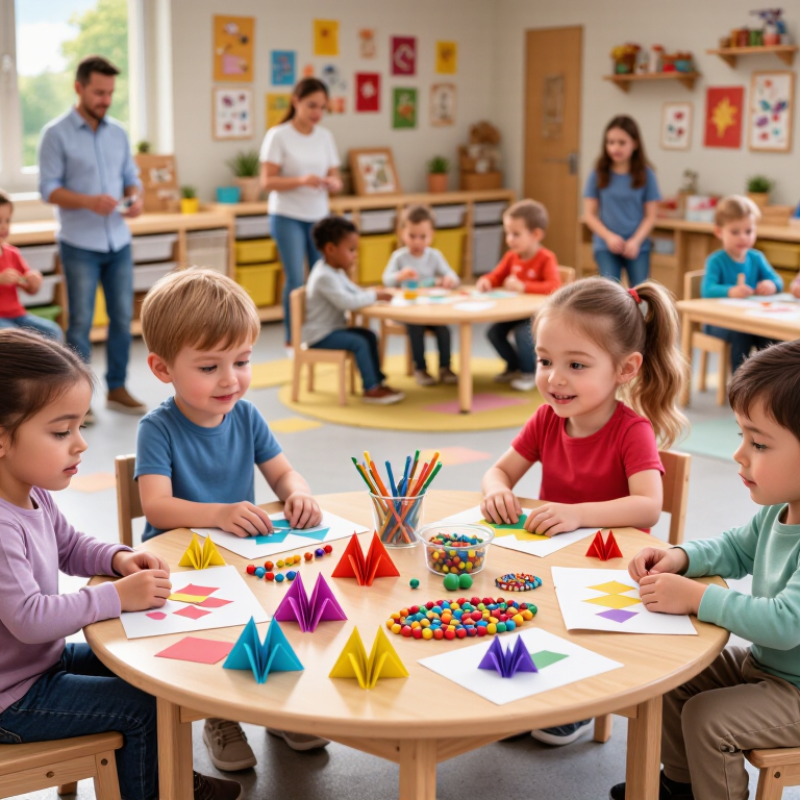
How Do Craft Activities Support Early Childhood Education?

Defining Craft Activities in Early Childhood Education

Craft Activities in Early Childhood Education

Craft activities are purposeful, hands-on making experiences for young children. They include drawing, cutting, folding, modelling, weaving, collage, and building with safe, everyday materials. The goal is not a perfect product. Children make choices, test ideas, and change their plans. A paper plate may become a moon, then a noisy drum.

In classroom practice, craft supports fine-motor control, visual planning, language, and social learning. Children squeeze clay, guide scissors, and place small pieces carefully. These movements strengthen hand coordination needed for writing and self-care. Educators can ask, “What are you trying?” rather than correcting the design. This keeps the activity open-ended. It also reveals children’s thinking. Sometimes, however, adults provide too much help. The finished craft may look better, but the learning becomes smaller.

The OECD’s Starting Strong reports describe play-based learning as important for active exploration and children’s agency. UNICEF’s 2018 Learning through Play report found that about nine in ten parents viewed play as important for development, while many reported limited time for it.

Craft activities offer a practical response when materials are simple and routines are flexible. A 15-minute collage can use paper scraps, fabric pieces, and paste. Teachers should still consider allergies, tool safety, cultural meaning, and accessibility. Craft is not automatically educational. Its value depends on thoughtful choices, patient observation, and room for children to make mistakes.

Developing Fine Motor Skills Through Hands-On Craft Work

How Do Craft Activities Support Early Childhood Education?

Developing Fine Motor Skills Through Hands-On Craft Work

Craft activities turn small movements into meaningful practice. Children tear paper, thread large beads, pinch clay, and squeeze glue bottles. These actions strengthen finger muscles and improve hand-eye coordination. They also develop the pincer grasp needed for pencils, scissors, and clothing fasteners.

The CDC’s 2022 Developmental Milestones checklist identifies drawing a person with three or more body parts as a typical four-year skill. Craft work gives children repeated, playful chances to build toward this ability. A child may hold a crayon awkwardly at first. That is normal. With time, short drawing sessions can support steadier pressure and better control. NAEYC’s 2020 Developmentally Appropriate Practice statement also emphasizes active, play-based learning with suitable challenges.

The details matter. Offer thick crayons before thin pencils. Use paper that tears easily. Let children cut lines, not perfect shapes. Some projects will look messy. That is not failure. Adults can ask, “How did you make that mark?” instead of correcting every movement. This protects confidence and encourages language.

Craft time is not magic. Over-directing a project can reduce choice and persistence. Small parts also require close supervision. Educators should observe grip, fatigue, and frustration, then adjust materials. A child who avoids scissors may need wider handles or more time, rather than pressure.

Supporting Cognitive Growth and Early Problem-Solving

Craft activities turn abstract thinking into touchable decisions. A child tears paper, compares shapes, and tests balance. These small actions exercise planning, working memory, and flexible thinking. When a paper bridge collapses, the child notices a cause and changes one detail. This is early problem-solving in visible form. The OECD’s Starting Strong research identifies play-based learning as important for cognitive, language, and self-regulation development. UNICEF’s 2023 analysis across 76 countries reported that about seven in ten children aged three and four were developmentally on track across key domains. Craft is not a magic solution, but it offers repeated practice within ordinary classroom routines.

Tips: Provide open-ended materials, such as cardboard, yarn, clay, safe scissors, and recycled paper. Ask, “What could you change?” instead of, “Is it correct?” Let children predict before cutting. Photograph failed designs and invite a second attempt. Keep instructions brief. Adults should model thinking aloud, not take over. Observe grip, persistence, language, and peer negotiation. These notes support responsive planning. Avoid measuring success by neatness.

In practice, some children need more time. I have sometimes rushed a project and mistaken silence for understanding. That was a weak assumption. Developmentally appropriate practice guidance supports intentional, play-based experiences with adult scaffolding. A quiet child may be thinking deeply. Or feeling confused. Ask, watch, and adjust. This uncertainty deserves attention.

Encouraging Language, Social, and Emotional Development

How Do Craft Activities Support Early Childhood Education?

Craft activities create natural opportunities for young children to use language, build relationships, and manage emotions. While children tear paper, mix colors, or shape clay, educators can introduce precise words such as “smooth,” “stretchy,” and “underneath.” Open-ended questions encourage longer responses: “What happened when you pressed harder?” Children also practice listening when they explain their choices or respond to a peer. These small conversations support vocabulary, confidence, and early reasoning.

Crafts can strengthen social development through shared materials and simple cooperation. A child may ask for scissors, wait for glue, or help a friend hold cardboard. These moments teach turn-taking and problem-solving more effectively than repeated instructions alone. Emotional growth appears when children handle mistakes. A torn collage can bring frustration, but supportive adults can name the feeling and model a calm next step. I have noticed that adults sometimes fix projects too quickly. That habit may reduce children’s ownership, even when the intention is kind.

Tips: Offer two or three materials, not a crowded table. Describe actions without judging the result. Invite children to explain their work. Keep the process flexible. Some children need quiet space, while others learn through conversation. Observe carefully, because a child’s silence may show concentration, uncertainty, or a need for support.

Applying Safe and Inclusive Craft Practices in the Classroom

Craft activities support early childhood education by turning abstract ideas into touchable experiences. In my classroom observations, children often explain patterns better with paper shapes than worksheets. Safe practice begins before the table opens. Teachers check scissors, non-toxic materials, loose parts, allergies, and age guidance. They keep small pieces away from children who still mouth objects. A clear demonstration shows how to carry scissors and ask for help. Children need choices, not pressure, to participate.

Inclusive craft practice respects different motor skills, languages, cultures, and sensory needs. Offer thick-handled tools, pre-cut pieces, adaptive grips, and quiet spaces. Let children tear, stamp, weave, or dictate ideas instead of demanding neat cutting. Display varied family and community influences without copying sacred designs casually. Ask families about meaningful symbols. I have sometimes given too many choices, and the room became noisy and unfocused. Fewer options may work better, though not for every group.

Tips: Count materials before and after each session. Use washable surfaces and supervise continuously. Label picture instructions for emerging readers. Invite children to describe risks in their own words. Photograph the process only with proper permission. Watch for frustration, fatigue, or exclusion, then adjust the task. Document what worked and what failed. Reflection improves the next lesson.

How Do Craft Activities Support Early Childhood Education?

Adult–child ratios for safer, more inclusive craft activities in early learning classrooms

Smaller groups make it easier for educators to supervise scissors, glue, and small materials while adapting instructions, offering accessible tools, and supporting children who need additional assistance. The figures show the maximum number of children per staff member specified for selected age groups in U.S. Head Start center-based programs.

Source: U.S. Head Start Program Performance Standards, 45 CFR §1302.21(b)(1). Lower values indicate closer adult supervision.

FAQS

What are craft activities in early childhood education?

They are hands-on making experiences using safe, everyday materials. Children may draw, cut, fold, model, weave, collage, or build. The goal is exploration, not a perfect product.

How do craft activities support fine-motor development?

Children squeeze clay, guide scissors, and place small pieces carefully. These actions strengthen hand coordination. That coordination supports writing and self-care.

How can crafts encourage problem-solving?

Children compare shapes, test balance, and change plans. A paper bridge may collapse. Then children can adjust one detail and try again.

What materials are suitable for young children’s crafts?

Useful materials include cardboard, yarn, clay, paper scraps, fabric, and safe scissors. Choose materials that match children’s ages and abilities. Simple materials can produce rich ideas.

Should adults help children complete their crafts?

Adults should guide thinking without taking control. Ask, “What could you change?” instead of correcting the design. Too much help may create a neater product but reduce learning.

How can educators support children who struggle with a project?

Give extra time and keep instructions brief. Invite children to predict before cutting. Photograph a failed design and encourage another attempt. Failure can become useful information.

How can teachers observe learning during craft activities?

Watch children’s grip, persistence, language, planning, and peer negotiation. A quiet child may be thinking deeply. Or feeling confused. Ask, watch, and adjust.

What safety and inclusion issues should educators consider?

Check allergies, tool safety, cultural meanings, and accessibility needs. Adapt materials or movements when necessary. Craft is not automatically educational. Thoughtful choices matter.

Conclusion

Craft activities are purposeful, hands-on experiences that allow young children to explore materials, express ideas, and create simple projects through drawing, cutting, building, folding, or molding. This summary explains how do craft activities support early childhood education by strengthening fine motor skills, hand-eye coordination, and control through repeated movements. As children plan designs, choose materials, and adjust their approaches, they also develop early cognitive abilities, including concentration, sequencing, creativity, and problem-solving.

Craft work can further support language, social, and emotional development. Children learn to describe their ideas, listen to others, cooperate, share materials, and feel proud of their achievements. Open-ended projects also encourage confidence and emotional expression because there is often more than one successful result. In the classroom, educators should provide age-appropriate, non-toxic materials, supervise tools carefully, maintain clean work areas, and adapt activities for different abilities, cultures, and learning preferences. Inclusive and safe practices help every child participate meaningfully and enjoy the learning process.

Aria

Aria

Aria is a dedicated marketing professional with a deep passion for innovative strategies and a keen understanding of our company's product offerings. With a wealth of experience in the industry, Aria excels at crafting engaging content that highlights the unique features and benefits of our......