Craft toys are moving beyond simple play products. They now combine creativity, learning, screen-free activity, and gift appeal. Circana’s 2024 Global Toy Industry Report showed a challenging market, with worldwide toy sales affected by cautious consumer spending. However, creative and collectible categories continued attracting attention in several markets. Grand View Research also projects steady growth for the do-it-yourself toys segment through 2030. These findings suggest opportunity, but not automatic success.
So, what should distributors know before importing craft toys? Product selection must begin with evidence, not attractive packaging alone. Examine marketplace reviews, seasonal demand, competitor prices, and age-specific purchasing patterns. A craft kit with wooden beads, paint, glue, and scissors should be assessed item by item. Materials, breakage risks, instructions, and packaging claims can all affect its commercial performance.
Compliance deserves equal attention. Distributors should verify applicable safety requirements, including ASTM F963 in the United States, EN 71 in the European Union, and relevant chemical and labeling rules. The European Commission’s Safety Gate reports repeatedly show that toys may be recalled for small parts, unsafe chemicals, or inadequate warnings. Testing should come from competent laboratories, with traceable technical files and supplier records. Do not rely on a supplier’s certificate without checking its scope and date.
Import planning also requires realistic landed-cost calculations. Include tooling, inspection, freight, duties, testing, storage, returns, and currency movement. A low factory price can become expensive quickly. Even experienced buyers misjudge demand. That weakness should be acknowledged early. Successful importing in 2026 will depend on careful sourcing, transparent documentation, child-focused design, and continuous market review.
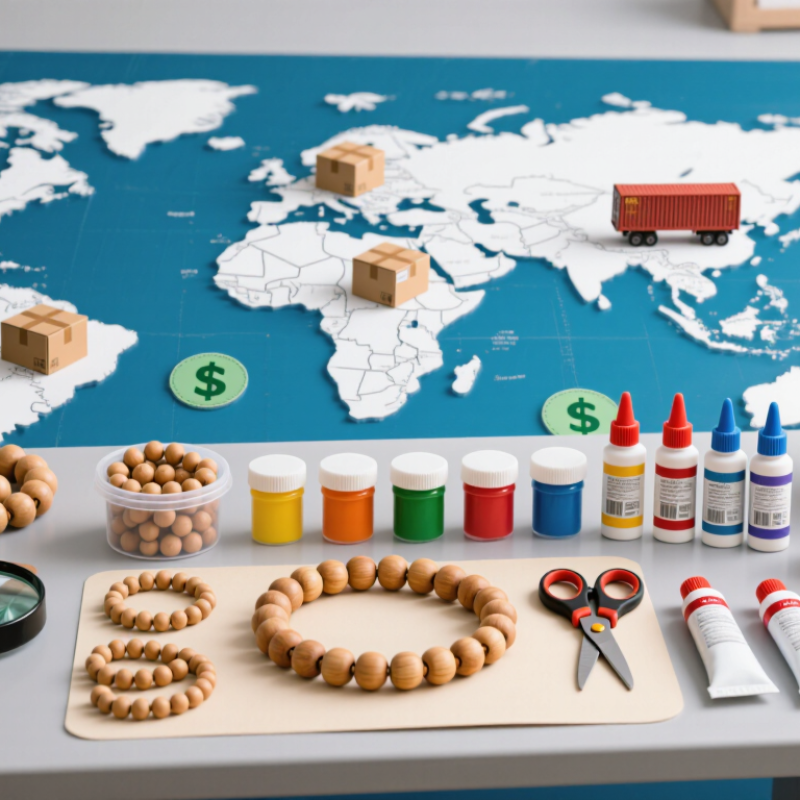
Define Your Craft Toy Product and Target Import Market
How to Import Craft Toys Successfully in 2026?
Define the product before contacting overseas suppliers. “Craft toy” can mean a bead kit, paper model, clay set, or wooden building activity. Each type needs a clear product brief. Describe the materials, finished size, skill level, recommended age, and included tools. Add photos of every component, including small parts and packaging. A vague brief creates uneven samples and unexpected costs.
In practical sourcing work, I have found that a product’s learning purpose matters as much as its appearance. Parents may seek creativity, while schools may value durability and easy cleanup. Decide whether the toy suits home users, classrooms, gift shops, or hobby retailers. Then select one import market with care. Study local age-labeling rules, chemical restrictions, language requirements, testing procedures, and seasonal demand. Check official customs guidance before estimating landed costs.
Market fit can change quickly. A colorful kit may sell well online but fail in physical stores because its box is too large. I once underestimated instruction quality, and customer questions increased. That mistake still matters. Test a small shipment with real users. Track breakage, assembly time, repeat interest, and complaints. Compare the retail price with freight, duties, inspection fees, and returns. Some details will remain uncertain, especially during the first order. Keep written evidence for every decision.
Select Reliable Manufacturers and Evaluate Product Quality
How to Import Craft Toys Successfully in 2026?
Reliable manufacturers make craft toy importing safer and more predictable. Look beyond attractive catalogs. Check how long the factory has produced similar items, how it controls materials, and whether it answers technical questions clearly. A dependable supplier should provide business details, production photos, sample records, and current test reports for your destination market. Ask who performs inspections and what happens when a batch fails.
Order samples from more than one production run. Compare color, texture, part size, glue strength, and packaging damage. Inspect small components carefully. They should remain secure during normal handling. Check painted surfaces for peeling, strong odors, or uneven coverage. For kits, count every piece and follow the instructions yourself. The experience should feel clear, not frustrating. Children and parents notice confusing steps quickly.
Do not approve a factory because one sample looks perfect. That is an easy mistake. Request a pre-production sample, then compare it with a random finished unit. Keep written specifications for dimensions, materials, colors, tolerances, and carton labels. A factory may promise consistency but struggle during busy seasons. Ask for a realistic production schedule and independent inspection access. I would also leave room for doubt: an impressive audit cannot reveal every future problem. Steady communication, honest corrections, and traceable quality records matter more than polished promises.
Calculate Costs, Choose Shipping Terms, and Prepare Customs Documents
How to Import Craft Toys Successfully in 2026?
Calculate the landed cost before requesting a supplier’s final price. Include unit cost, molds, inspection, inland transport, freight, insurance, duty, VAT, brokerage, and storage. A small carton can become expensive after customs clearance. UNCTAD’s Review of Maritime Transport 2024 states that over 80% of global trade by volume moves by sea. This makes freight planning essential, even for lightweight craft toys.
Choose the shipping term carefully. Under ICC Incoterms 2020, FCA can suit container shipments when the buyer controls the main freight. FOB may work for port-to-port cargo, but it does not cover destination charges. DDP appears simple, yet the importer must verify who legally handles taxes and product compliance. Ask for two freight quotations. Compare transit time, insurance, and local fees.
Prepare documents before production starts. Keep a commercial invoice, packing list, bill of lading, origin statement, product description, HS classification, and test reports. Safety requirements differ by destination, so confirm applicable toy standards and labeling rules with a qualified customs broker. The World Bank’s Logistics Performance Index 2023 highlights customs efficiency as a major supply-chain factor. One overlooked document can create storage charges. My own planning preference is conservative: leave a cost buffer, because the first estimate is often too optimistic.
How to Import Craft Toys Successfully in 2026
Illustrative landed-cost planning scenario for 1,000 non-electronic craft toy units imported by sea. Costs are shown in USD and should be confirmed against the product’s HS classification, origin, destination, carrier quotation, and local tax rules.
Planning example: Product value is $4,200, while freight, insurance, duty, customs handling, and inland delivery add $2,300. The estimated landed cost is $6,500, or $6.50 per unit. Before shipment, prepare the commercial invoice, packing list, transport document, certificate of origin when required, product safety records, and any destination-specific import declarations. Compare FOB, CIF, and DDP quotations carefully because the party responsible for freight, insurance, customs clearance, duties, and taxes changes with the shipping term.
Conclusion
Importing craft toys successfully in 2026 requires a clear plan from product selection to final distribution. First, define the toy’s materials, design, age range, intended use, and target market. What should distributors know before importing craft toys? They should understand that safety requirements, testing procedures, certifications, warning labels, and packaging information may differ by destination. Confirm these details before placing an order to reduce delays and avoid costly revisions.
Distributors should also assess manufacturers through samples, production records, quality inspections, and communication reliability. Build a complete cost estimate that includes product pricing, packaging, transportation, insurance, duties, and other import expenses. Select suitable shipping terms, prepare accurate customs documents, and coordinate clearance in advance. After arrival, manage inventory carefully, monitor product condition, and develop a practical distribution plan based on customer demand. This organized approach supports compliance, controls risk, and creates a smoother path from production to market.
 JKit Toys
