2026 Top Craft Toys for Engaging Learning Experiences

Time:2026-10-29 Author:Sienna
0%

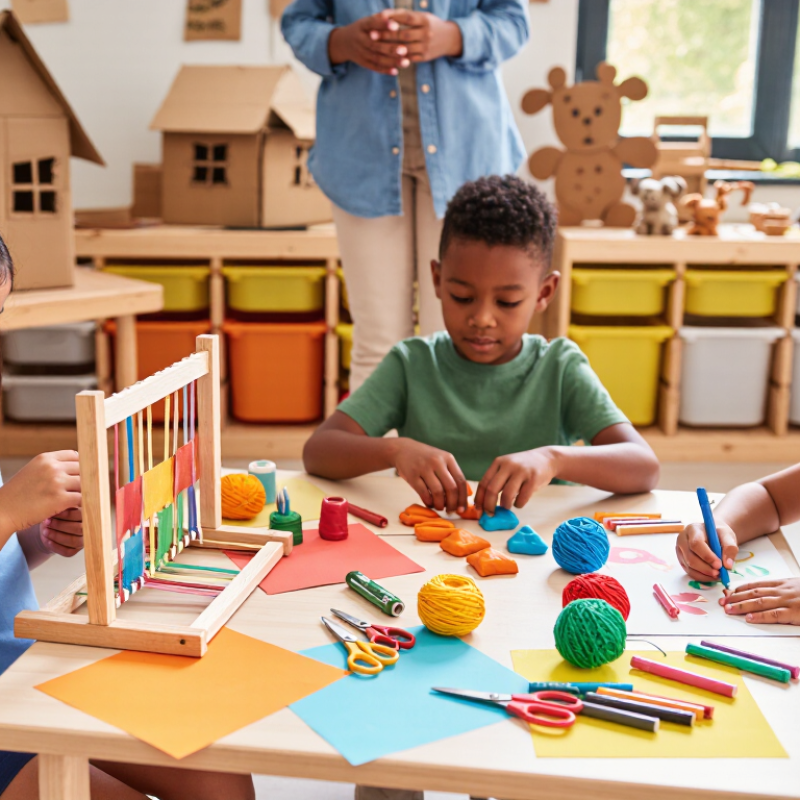
In 2026, the best craft toys do more than fill a rainy afternoon. They invite children to test ideas, make choices, and turn simple materials into something personal. A paper loom can introduce patterns. Soft modeling clay can make shapes easier to explore. The learning often begins with a small question: “What happens if I change this?”

Child-development educator Fred Rogers captured why playful making matters: “Play is often talked about as if it were a relief from serious learning. But for children, play is serious learning.” That idea offers a useful guide for how to create engaging learning experiences with craft toys: choose activities with room for experimentation, keep tools manageable, and let children explain their own designs. An adult’s thoughtful question can help, but taking over the project usually cannot.

This guide looks at craft toys that pair hands-on fun with skills such as fine-motor control, early math, storytelling, and problem-solving. Expect ideas for different ages, interests, and levels of adult support. Not every project will hold a child’s attention, and not every finished piece will look polished. That is worth remembering. A lopsided cardboard house may reveal more about planning and persistence than a perfect-looking craft made entirely by an adult.
2026 Top Craft Toys for Engaging Learning Experiences

What Craft Toys Are and How They Support Learning

Craft toys are play materials that invite children to make, decorate, build, or reshape something by hand. They might include paper, washable paint, clay, yarn, or reusable pieces. The finished object is only part of the experience.

A child choosing colors, testing how much glue holds, or changing a plan is practicing decision-making and problem-solving. Small actions count.

These activities can also support fine-motor control. Pressing a clay shape flat or threading large beads gives fingers purposeful work, while describing a pattern can build language and early math skills.

Keep the task manageable: offer a few materials, show one simple technique, then let the child explore. Adult help matters, especially with tools or small parts, but doing every step for a child can take away the useful challenge.

Not every project goes smoothly. Paper tears; colors turn muddy. That can feel frustrating, and sometimes the activity needs a pause.

A calm prompt such as “What could we try next?” leaves room for learning without promising that every craft session will be tidy or successful.

Key Skills Children Develop Through Hands-On Craft Play

Hands-on craft play turns abstract skills into small, visible decisions. When children cut paper, press clay, or thread large beads, they practise hand control and eye-hand coordination. These actions also build patience: a wobbly paper bridge may need another fold, not a quick fix from an adult. That pause matters.

Craft projects invite children to plan, test ideas, and adjust when materials behave differently than expected. Choosing a color pattern uses early math; explaining why a cardboard tower leans supports language and reasoning. Working beside a sibling or classmate can strengthen turn-taking and shared problem-solving. Still, not every activity feels engaging, and a finished object is not proof of learning. Some children need more time, simpler steps, or permission to make something entirely different.

Tips: Offer child-safe materials, demonstrate one technique, then let children lead. Ask, “What might you change?” Keep projects open-ended, and praise careful effort rather than neat results. Supervise tools and choose materials suited to each child’s age.

Popular Craft Toy Types for Different Ages and Interests

For preschoolers, large-piece threading kits, washable paint, and tear-resistant paper make good starting points. A child can press soft shapes into dough or dab paint across a sheet without needing precise control. Check age guidance and supervise projects involving small parts. Mess is part of the process.

School-age children often enjoy crafts with a visible result. Beginner sewing cards build hand coordination, while paper-engineering sets invite them to fold, cut, and test simple moving designs. Nature-focused kits can turn leaves, seed pods, and smooth stones into prompts for observation. Keep tools suited to the child’s abilities; a complicated project can become frustrating fast.

Older children may prefer jewelry-making, model building, or textile crafts that leave room for personal choices. A sketchbook alongside the supplies can help them plan patterns and record what they would change. Interest matters as much as age: a quiet child might enjoy detailed beadwork, while an energetic learner may prefer building and decorating. Not every kit lands well. Sometimes the instructions are too rigid, or the finished piece looks different from the picture. That can still be useful—if there is room to try again.

How to Choose Safe, Age-Appropriate Craft Toys

A safe craft toy should match a child’s abilities, not just their age or interests. Read the age guidance on the package, then check whether the activity needs skills your child is still developing. A kit with tiny beads may suit an older child but pose a choking risk for a toddler. Small parts matter. Think about how your child actually plays: do they still mouth objects, rush through steps, or need help handling scissors? Those details can make the age label more useful.

Check that materials are clearly identified and intended for children’s craft use. Look for sturdy pieces, smooth edges, secure lids, and simple instructions. If paints, glue, or modeling materials are included, follow the package directions and use them with suitable supervision. Keep craft supplies away from food, and wash hands after messy projects. Inspect tools and parts before each session; a cracked plastic tool or loose component can change an otherwise suitable activity. I sometimes find that a kit labeled for a child’s age still needs adult help. That is worth noticing, not a failure. Choose a project you can supervise comfortably, and store leftover pieces where younger children cannot reach them.

Ways to Use Craft Toys in Learning Activities

Craft toys work best when they are part of a clear learning activity, not just a pile of supplies. Offer colored paper, child-safe scissors, and glue, then invite learners to build shapes for a simple picture. Ask them to name each shape, compare its sides, or sort pieces by color. Small prompts keep the task focused while leaving room for personal choices. A paper garden can become a lesson in counting, patterns, and describing what is growing.

Try a storytelling activity with craft sticks, yarn, and reusable paper figures. Learners can make characters, arrange them in order, and tell a short story aloud. What happens next? Older children might write captions or change the ending. This connects making with speaking, reading, and sequencing without turning the activity into a worksheet. Keep the materials visible and offer one instruction at a time.

Craft projects can become messy, and the finished work may not match the plan. That is part of the process. Ask learners what they changed and why; their answers can reveal how they are thinking. Avoid correcting every uneven cut. Instead, demonstrate a technique when it is useful, and let children try again. Some activities will miss the mark. Adjust the prompt, simplify the materials, or give learners more time.

2026 Top Craft Toys for Engaging Learning Experiences

Ways to Use Craft Toys in Learning Activities

Use paper or reusable craft shapes to build a collage, then count each shape’s sides. The chart shows the defining side counts of these polygons and can prompt learners to sort, compare, and describe shapes.

FAQS

Which craft toys suit preschoolers?

Large threading pieces, washable paint, and tear-resistant paper are good starting points. Mess happens.

What crafts work well for school-age children?

Sewing cards, paper-engineering sets, and nature crafts offer visible results. Leaves and smooth stones can spark close observation.

How should I choose crafts for older children?

Try jewelry-making, model building, or textile crafts that allow personal choices. A sketchbook can help them plan patterns and note changes.

How can I check whether a craft toy is safe?

Match the activity to the child’s abilities, not only the age label. Check for tiny parts, smooth edges, secure lids, and clear instructions.

When should an adult supervise a craft activity?

Supervise projects involving small parts, scissors, paint, glue, or modeling materials. Some age-labeled kits still need adult help.

How can craft toys support learning?

Use paper shapes to explore colors, counting, patterns, and simple geometry. Ask children to name shapes or compare their sides.

Can craft activities help children practice storytelling?

Children can use craft sticks, yarn, and paper figures to create characters. They can arrange events and tell a short story aloud.

What if the finished craft looks different from the picture?

That can be useful, though it may feel disappointing. Ask what changed, then simplify the prompt or give the child more time.

Conclusion

Craft toys turn creativity into a hands-on way to learn. As children cut, shape, build, and decorate, they can explore ideas through trial and error while strengthening fine motor skills, focus, problem-solving, spatial reasoning, and self-expression. Different activities suit different ages and interests, from simple coloring and collage projects to more involved modeling, weaving, or construction. Choosing materials that match a child’s age and abilities, with clear instructions and appropriate adult supervision, helps make creative play both safe and enjoyable.

To understand how to create engaging learning experiences with craft toys, connect each project to a playful goal. Children might sort shapes and colors, tell a story through a handmade scene, or plan and build a structure together. Offer room for choice, encourage questions, and praise experimentation rather than aiming for a perfect result. These activities can support learning at home or in a classroom while making discovery feel imaginative, social, and fun.

Sienna

Sienna

Sienna is a skilled marketing professional with a deep expertise in our company’s core products and services. With a passion for innovation and detail, she plays a pivotal role in crafting insightful blog posts that not only highlight the unique features of our offerings but also provide valuable......