China Top DIY Craft Toys for Retailers What to Consider?

Time:2026-10-22 Author:Oliver
0%

DIY craft toys are becoming practical choices for retailers seeking creative, screen-free products with strong gift appeal. From bracelet kits to wooden painting sets, these products invite children and families to make something tangible. The finished item may sit on a bedroom shelf, while the activity creates the real value.

The key question is, what should retailers consider when selecting DIY craft toys? Product safety should lead the evaluation, including age guidance, non-toxic materials, secure components, and clear instructions. Suppliers should provide reliable test reports and consistent batch quality. A loose bead or confusing step can quickly damage customer trust. Retailers also need to examine packaging size, shelf visibility, shipping durability, and profit margins. A colorful box helps, but it cannot replace a satisfying crafting experience.

Market knowledge matters too. Experienced buyers often test samples with real families before placing larger orders. Watch how long children stay engaged, where instructions cause confusion, and whether the final result feels worth the price. Small details count. A smooth wooden piece, bright thread, or reusable storage pouch can improve perceived value. However, trends change quickly, and not every popular design will sell equally well in every region. That uncertainty deserves attention. A cautious retailer may begin with a limited quantity, collect customer feedback, and adjust the product mix. Reliable suppliers should communicate clearly about lead times, customization, packaging, and after-sales support. Good decisions come from evidence, not attractive photos alone.
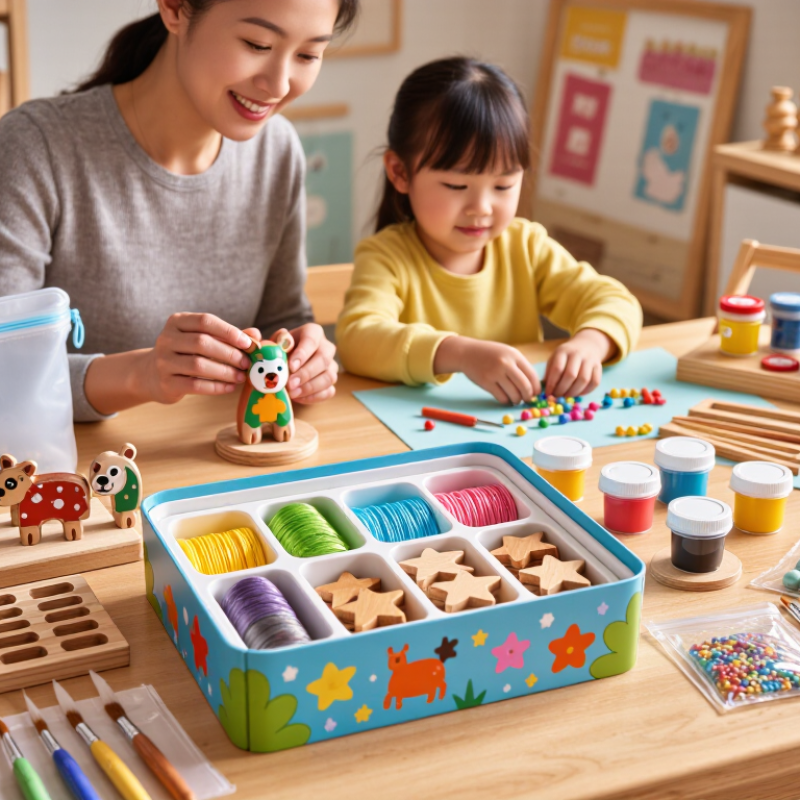
China Top DIY Craft Toys for Retailers What to Consider?

What Makes DIY Craft Toys Popular in the Chinese Retail Market?

DIY craft toys are popular in China because they turn shopping into an experience. Children can make paper animals, bead patterns, clay figures, or small room decorations. The finished item gives them something personal to display or share. Parents often value this hands-on process because it encourages patience, fine motor skills, and creative thinking away from screens. It also creates a practical gift choice for birthdays, school holidays, and family visits.

In Chinese retail stores, compact packaging matters. A clear window, bright instructions, and neatly separated materials help shoppers understand the product quickly. Retailers I have observed often place craft kits near stationery, children’s gifts, or seasonal displays. This positioning supports impulse purchases without requiring much shelf space. Local themes, festival colors, and familiar animals can also make a kit feel more relevant. However, cultural details should be used carefully. A forced theme may look decorative rather than meaningful.

Reliable quality strongly affects repeat sales. Kits should include complete parts, readable instructions, safe materials, and age guidance. Missing beads or weak adhesive can damage trust after one purchase. Retailers also need to test whether children can finish the project within a reasonable time. Some kits look attractive but become frustrating after ten minutes. That is an easy mistake to make. Price is important, but perceived value depends on the making experience, not material quantity alone. Feedback from parents and store staff can reveal problems that packaging photos hide.

Which Types of Chinese DIY Craft Toys Should Retailers Consider?

Retailers should examine Chinese DIY craft toys by play value, repeat purchase potential, and compliance readiness. Grand View Research estimated the global arts and crafts toys market at about USD 4.6 billion in 2023. It also projects strong growth through 2030. I would not treat that forecast as a guarantee. Local pricing and shelf space still decide performance.

Painting kits suit weekend projects and gift displays. Clay modeling sets create visible results quickly. Bead and jewelry kits offer refill opportunities, but small parts require careful age grading. Paper craft, sewing, and miniature-building sets can attract older children and hobby-focused adults. STEM craft kits may also work when they connect simple construction with clear learning outcomes.

According to Circana’s 2024 toy industry review, creative and construction play continued to support demand across several major markets.

Retailers should request material specifications, age recommendations, test reports, and packaging samples before ordering. Check pigment safety, odor, sharp edges, choking hazards, and tool durability. EN 71, ASTM F963, and other destination-market requirements should guide supplier discussions. A lower unit price can become expensive after complaints or returns. I have seen attractive kits fail because instructions were vague. That detail matters. Test one complete kit yourself, including drying time, cleanup, and the child’s likely frustration. Even strong products may need clearer steps, fewer loose pieces, or better visual guidance.

How to Evaluate Materials, Safety, Quality, and Age Suitability?

China Top DIY Craft Toys for Retailers: What to Consider?

Choosing DIY craft toys requires more than checking colorful packaging. Retailers should examine material composition, surface finishes, odors, and small components. A wooden bead should feel smooth, without splinters or sharp corners. Paint should resist light rubbing and should not leave strong chemical smells. Request current safety test reports from suppliers, then verify whether they match the actual production batch. Documents help, but hands-on inspection remains essential.

Tips: Order samples before placing large quantities. Check glue strength, thread durability, package seals, and instruction clarity. Try the activity yourself. If an adult struggles with the steps, younger children may become frustrated. Also review choking risks, recommended supervision, and age labels carefully. Age suitability should reflect motor skills, reading ability, and attention span, not only a printed number.

Quality also appears during repeated use. Open several units from one carton, because one excellent sample can hide uneven production. Compare colors, component counts, and cutting accuracy. Ask how defects are recorded and corrected. A reliable supplier should explain these processes clearly and provide traceable batch information. Retailers should still question their own assumptions. “Non-toxic” sounds reassuring, but it is not a complete quality assessment. Practical testing, clear evidence, and careful judgment create a safer buying decision.

What Packaging, Customization, and Certification Requirements Matter?

China Top DIY Craft Toys for Retailers: What to Consider?

Packaging affects safety, shelf appeal, and shipping costs. A strong package should protect beads, tools, paints, and small parts from damage. Clear age guidance must remain visible after transport. Use durable cartons, sealed inner bags, and readable instruction sheets. Avoid decorative elements that detach easily.

Customization needs more than a printed logo. Retailers should confirm colors, dimensions, insert layouts, language versions, and minimum order quantities. Ask for a pre-production sample before approving bulk manufacturing. Check whether the printed artwork matches the physical sample under store lighting. Small changes can affect assembly time and customer satisfaction. Keep instructions simple. Children and parents scan quickly.

Certification requirements depend on the destination market and product design. Request material declarations, test reports, batch records, and traceability details from the factory. Testing may cover mechanical safety, flammability, chemical migration, paint composition, and packaging warnings. Products containing magnets, batteries, or tiny components need closer review. Requirements can change by age group and country. Do not treat one certificate as universal approval. That assumption is risky. An affordable package may still fail if its ink, adhesive, or plastic bag lacks suitable documentation. A final retail audit should compare the approved sample, test records, labels, and shipped goods. Small inconsistencies deserve attention.

China Top DIY Craft Toys for Retailers: What to Consider?

The planning index reflects the relative importance of packaging, customization, and certification when sourcing DIY craft toys from China. Certification priorities vary by destination market; EN 71 is commonly used in the European Union, while ASTM F963 and CPSIA requirements apply to the United States.

How Can Retailers Compare Suppliers, Costs, and Market Potential?

China Top DIY Craft Toys for Retailers: What to Consider?

Retailers should compare suppliers through evidence, not attractive catalogs. Request production photos, sample kits, material specifications, and recent quality records. A factory visit or independent inspection can reveal packing mistakes and inconsistent parts. Ask about minimum order quantities, tooling fees, lead times, and replacement policies. Cheap unit pricing may hide expensive freight, customs charges, storage, and damaged goods.

Test samples with real users. Observe whether children understand the instructions without adult help. Measure assembly time, mess, durability, and repeat-play interest. Check age grading, warnings, labeling, and required safety documentation for each sales market. Market potential depends on more than novelty. Consider shelf space, seasonal demand, local hobbies, gift prices, and online search behavior. A beautiful kit can still fail if its retail price feels too high.

Tips: Build a comparison sheet with identical questions for every supplier. Record unit cost, landed cost, defect rate, capacity, and payment terms. Order a small trial batch before scaling. It may feel inefficient, but early evidence is cheaper than a warehouse full of slow stock. Review customer feedback after four weeks. I have found that packaging often influences sales more than expected. Yet this lesson is not universal, so test it with your audience.

China Top DIY Craft Toys for Retailers: What to Consider?
How Can Retailers Compare Suppliers, Costs, and Market Potential?
DIY Craft Toy Category Typical Product Format Indicative China Wholesale Cost
(USD / Set)
Common MOQ Range
(Sets)
Typical Retail Price
(USD / Set)
Indicative Gross Margin
Before Retail Expenses
Shipping & Packaging Considerations Key Safety and Compliance Checks Market Potential Best Retail Channels
Wooden Building & Construction Sets Unpainted or water-based painted blocks, connectors, cards, and building instructions. $2.50–$8.00 300–1,000 $14.99–$34.99 Approximately 47%–77% Wood is relatively dense and increases freight weight. Use protective inner packaging to reduce chipped edges and surface damage. Check EN 71, ASTM F963, or applicable local toy rules; verify wood coatings, small parts, sharp edges, and formaldehyde limits where required. High
Evergreen, screen-free, and suitable for gift purchases.
Educational retailers, specialty toy stores, museums, online marketplaces, and gift shops.
Paper Origami & 3D Paper Craft Kits Pre-cut paper, folding instructions, stickers, templates, and simple display components. $0.80–$3.00 500–3,000 $7.99–$19.99 Approximately 62%–90% Lightweight and efficient for shipping. Flat packaging lowers storage cost, but moisture protection is important. Check paper dyes, inks, adhesives, age grading, choking hazards from small accessories, and labeling requirements. High
Low entry price and strong suitability for classroom or group activities.
Bookstores, stationery retailers, school-supply stores, craft shops, and online retail.
Bead Jewelry & Friendship Bracelet Kits Plastic, acrylic, wood, or glass beads with elastic cord, clasps, charms, and instructions. $1.20–$5.00 500–2,000 $9.99–$24.99 Approximately 50%–88% Small components require organized compartments and secure polybags or boxes. Count accuracy is important. Test for accessible small parts, heavy metals in coatings, phthalates where applicable, cord strength, and age suitability. High
Personalization, repeat purchases, and strong social-sharing appeal.
Fashion-accessory stores, craft retailers, youth lifestyle stores, pop-up shops, and e-commerce.
Air-Dry Clay & Modeling Kits Colored modeling clay, sculpting tools, molds, texture plates, and project guides. $1.80–$6.50 500–1,500 $12.99–$29.99 Approximately 50%–82% Moisture and temperature can affect product quality. Use sealed packs and verify shelf-life performance during transit. Check ingredient documentation, preservatives, microbial safety, migration testing, tool edges, and age-grade warnings. High
Tactile play supports repeat use and project-based learning.
Art-supply stores, educational retailers, activity boxes, supermarkets, and online channels.
DIY Sewing & Felt Craft Kits Felt shapes, yarn, blunt needles, thread, stuffing, buttons, and illustrated instructions. $1.50–$5.50 300–1,500 $11.99–$27.99 Approximately 54%–87% Lightweight, but components should be sorted and sealed. Needles and sharp tools require clear packaging and age labeling. Check needle design, small parts, fiber composition, flammability requirements, and age grading. Medium–High
Strong educational value but generally more age-dependent.
Craft stores, educational shops, gift stores, libraries, and subscription activity boxes.
Diamond Painting & Mosaic Art Kits Printed adhesive canvas, colored resin pieces, applicator pen, tray, wax, and sorting bags. $1.50–$6.00 500–2,000 $12.99–$34.99 Approximately 54%–89% Small pieces require leak-resistant and tamper-resistant packaging. Flat boxes reduce dimensional shipping costs. Check small-part warnings, adhesive safety, pigment documentation, accessory material safety, and accurate piece counts. High
High perceived value and strong suitability for hobby-focused consumers.
Hobby stores, gift shops, online marketplaces, adult-craft retailers, and seasonal promotions.
Paint-by-Number & Beginner Art Sets Printed canvas or board, paints, brushes, palette, and numbered instructions. $2.00–$8.00 300–1,000 $14.99–$39.99 Approximately 47%–87% Paint containers must be sealed against leakage. Canvases and boards need protection from bending and moisture. Check paint composition, preservatives, brush safety, labeling, age grading, and applicable toy or art-material requirements. High
Broad appeal across children, families, and adult beginners.
Art retailers, department stores, gift shops, bookstores, and direct-to-consumer websites.
DIY Candle, Soap & Bath Craft Kits Wax or soap base, molds, colorants, fragrance components, tools, and instructions. $4.00–$12.00 300–1,000 $24.99–$59.99 Approximately 52%–84% Heat-sensitive materials, liquids, fragrances, and chemical documentation can increase freight and storage complexity. Review chemical safety data, ingredient declarations, fragrance allergens, burn risks, age restrictions, and dangerous-goods rules. Medium–High
High perceived value, but compliance and handling are more complex.
Adult craft stores, lifestyle retailers, gift shops, workshops, and specialty e-commerce.
Recycled Material Craft Kits Cardboard, paper tubes, natural fibers, reusable components, glue, and project cards. $1.00–$4.50 500–2,000 $9.99–$24.99 Approximately 55%–90% Material consistency can vary. Use moisture-resistant packaging and define acceptable cosmetic variation before production. Check material cleanliness, inks, adhesives, sharp edges, small parts, recycled-content claims, and environmental marketing claims. Medium–High
Strong sustainability story when claims are documented and specific.
Eco-conscious retailers, schools, museums, gift stores, and community activity programs.
Comparison notes: Wholesale costs are indicative planning ranges in USD per retail-ready set and exclude tooling, certification, freight, customs duties, taxes, artwork, and retailer operating expenses. Retail prices are common planning bands rather than guaranteed market prices. Gross margin is calculated as (Retail Price − Wholesale Cost) ÷ Retail Price. Actual quotations vary according to materials, decoration, packaging, testing scope, order quantity, Incoterms, and destination market.

Supplier evaluation checklist: Request a complete bill of materials, production samples, factory quality records, test reports from an accredited laboratory, carton dimensions, master-carton quantity, packaging photographs, lead time, defect allowance, replacement policy, and written confirmation of age grading and labeling requirements.

Common regulatory references: EN 71 for toys sold in the European market, ASTM F963-23 and applicable U.S. Consumer Product Safety requirements for the United States, and ISO 8124 as an international toy-safety reference. Requirements differ by destination and product type and should be verified before purchase.

FAQS

Why are DIY craft toys popular in the Chinese retail market?

They turn shopping into an activity. Children create paper animals, bead patterns, clay figures, or small decorations. The finished piece feels personal and shareable.

What benefits do parents often see in craft kits?

Crafting can build patience, fine motor skills, and creative thinking. It also offers a screen-free activity. The benefits are useful, but they should not be exaggerated.

Where should retailers place DIY craft toys?

Suitable areas include stationery shelves, children’s gifts, and seasonal displays. These locations support quick decisions and require little shelf space. Visibility matters.

What packaging details help shoppers understand a craft kit?

A clear window, bright instructions, and separated materials make the contents easier to judge. Show the finished project clearly. Attractive packaging alone is not enough.

How can local themes improve a craft toy’s appeal?

Festival colors, familiar animals, and regional motifs can make products feel relevant. Use cultural details carefully. A forced theme may look decorative and empty.

What should retailers inspect before ordering large quantities?

Order samples first. Check smooth surfaces, strong glue, durable thread, package seals, and readable instructions. Try making the item yourself. This reveals hidden problems.

How can retailers judge safety and age suitability?

Inspect materials, odors, finishes, sharp edges, and small components. Review choking risks and supervision guidance. Age labels should match reading ability, motor skills, and attention span.

How can retailers identify inconsistent product quality?

Open several units from one carton. Compare colors, component counts, cutting accuracy, and package condition. One excellent sample can hide uneven production.

What documents and supplier information should retailers request?

Request current safety reports that match the actual production batch. Ask how defects are recorded and corrected. Traceable batch information is helpful. Documents still need practical checking.

What makes a craft kit feel worth its price?

Perceived value depends on the making experience, not material quantity alone. A simple kit can succeed if children finish it comfortably. Some attractive kits become frustrating after ten minutes.

Conclusion

China’s DIY craft toy market is growing as families and young consumers seek creative, educational, and screen-free activities. Popular products include painting sets, jewelry-making kits, paper crafts, clay projects, wooden assembly toys, and seasonal handmade activities. Their appeal comes from easy participation, visual results, gift value, and opportunities for children to develop patience, imagination, and fine motor skills. Retailers should select products that match local interests, price expectations, store formats, and seasonal demand.

When deciding what should retailers consider when selecting DIY craft toys, they should carefully assess material safety, durability, non-toxic components, clear instructions, age suitability, and product quality. Attractive, practical packaging should explain the contents, recommended age, usage steps, and safety guidance. Retailers may also request customized colors, themes, quantities, or packaging designs, while confirming that products meet applicable testing and certification requirements. Finally, comparing suppliers should include unit cost, minimum order quantity, production consistency, lead time, customization ability, communication, and after-sales support. A balanced evaluation of cost, quality, and market potential can help retailers build a reliable and appealing product range.

Oliver

Oliver

Oliver is a seasoned marketing professional with a wealth of expertise in driving brand awareness and engagement. With a deep understanding of our company's product offerings, he consistently delivers high-quality content that enriches our professional blog. His insights not only shed light on......