Why are creative activity toys becoming more popular? The answer reaches beyond colorful packaging or short-lived childhood trends. These toys invite children to build, draw, sort, shape, test, and change their ideas. A child may spread wooden blocks across a living-room rug, mix colors with a brush, or rebuild a cardboard model after it collapses. Each small action creates a practical learning experience.
Developmental psychologist Alison Gopnik captures this value clearly: “Play is not just a way of having fun but a way of doing serious research.” Her view helps explain why parents and educators increasingly value open-ended toys. These products can encourage problem-solving, fine-motor practice, language, patience, and independent decision-making. They also allow children to experience mistakes without receiving a single “correct” answer. That freedom matters.
The trend is not perfect. Some creative toys are expensive, overdesigned, or marketed with educational promises that deserve closer examination. A toy does not automatically create creativity. Adult guidance, available time, and a child’s personal interests still shape the experience. A simple set of clay may produce deeper engagement than a complex electronic kit. This article will examine how screen-conscious parenting, hands-on learning, social play, and demand for flexible products influence the market. It will also consider evidence, expert perspectives, and real household experiences. The question is not whether every creative toy is beneficial. It is whether thoughtfully designed play can give children more space to explore, revise, and imagine.
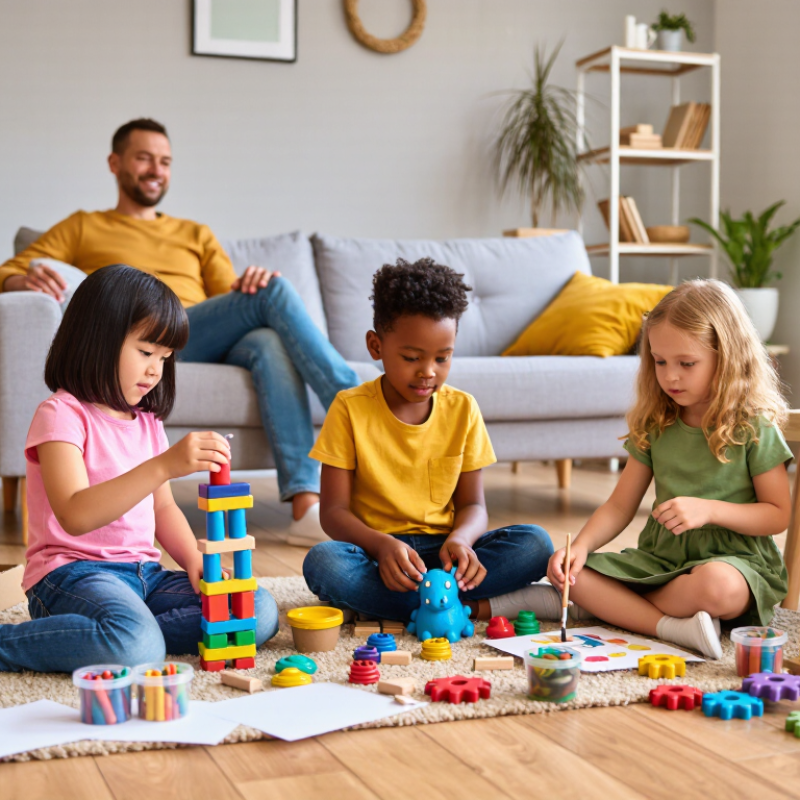
Creative activity toys are becoming more visible within the estimated $108.7 billion global toy market. Their appeal comes from participation, not passive entertainment. Children build, sort, design, test, and change the result with their hands.
The category includes construction sets, craft materials, sensory tools, beginner science kits, and open-ended role-play pieces. A defining feature is flexibility. One set can become a bridge today and a moving creature tomorrow. Good designs encourage problem-solving without forcing one correct answer. They also suit different abilities, interests, and learning speeds.
Safety remains essential. Materials should be age-appropriate, durable, non-toxic, and easy to inspect. Clear instructions help, but too many rules can limit discovery. The category is not perfectly defined. Some products look creative but offer only repetitive assembly.
Tips: Choose toys with more than one possible outcome. Check small parts, sharp edges, and cleaning needs. Invite children to explain their choices, rather than correcting every result. A cardboard tower that leans may show useful experimentation. It may also collapse quickly.
Adults should observe how a toy performs in real homes, not only in product descriptions. Does it survive repeated use? Can children begin independently? Does it support shared play without creating frustration? These practical questions add reliability to market claims.
Creative value is not measured by complexity alone. Sometimes, simple materials produce deeper concentration. That is easy to overlook.
Why Are Creative Activity Toys Becoming More Popular?
STEM toy sales are projected to grow at an 8.7% CAGR through 2030. This forecast reflects rising interest in hands-on learning at home and in classrooms. Creative activity toys combine play with building, testing, measuring, and problem-solving. A child may connect simple parts, observe a small machine move, then change the design. That process makes abstract ideas feel real.
Parents and educators also value activities that reduce passive screen time. However, market growth does not guarantee educational quality. Some kits look impressive but offer limited exploration. Others may frustrate children with unclear instructions or fragile components. Practical evaluation matters. A useful toy should match the child’s age, support safe experimentation, and provide more than one possible result.
Tips:
Choose open-ended projects with adjustable parts. Check whether instructions explain the science, not only the steps. Watch for durable materials and manageable difficulty. Let children make mistakes before offering solutions. Their first design may fail. That is often where learning begins.
The expanding market may also benefit from classroom demand for affordable project-based learning. Teachers can use creative toys to demonstrate energy, structure, coding logic, or basic engineering. Still, access remains uneven because quality materials can be expensive. Future growth will depend on better design, clearer learning outcomes, and products that encourage curiosity without removing the challenge.
| Market Dimension | Reference Period | Data Point | Calculation or Basis | What It Indicates |
|---|---|---|---|---|
| Projected STEM toy sales CAGR | 2024–2030 | 8.7% | Growth rate stated in the supplied market title | STEM-related toy sales are expected to expand faster than a flat replacement market. |
| Forecast duration | 2024–2030 | 6 years | Six annual compounding periods from the 2024 base year to 2030 | The forecast captures both short-term demand changes and longer-term adoption trends. |
| Indexed STEM toy sales | 2024 | 100.0 | Base-year index; the underlying market value is not specified | Provides a neutral reference point without assigning an unsupported currency value. |
| Indexed STEM toy sales | 2025 | 108.7 | 100 × 1.087 | First-year growth adds 8.7 index points to the base. |
| Indexed STEM toy sales | 2026 | 118.2 | 100 × 1.087² | Compounding produces a gain of approximately 18.2% from the 2024 base. |
| Indexed STEM toy sales | 2027 | 128.5 | 100 × 1.087³ | Continued growth reflects increasing interest in hands-on learning products. |
| Indexed STEM toy sales | 2028 | 139.7 | 100 × 1.087⁴ | The market index is approximately 39.7% above the 2024 reference level. |
| Indexed STEM toy sales | 2029 | 151.8 | 100 × 1.087⁵ | Annual compounding becomes increasingly important in the later forecast years. |
| Indexed STEM toy sales | 2030 | 165.1 | 100 × 1.087⁶, rounded to one decimal place | At the stated CAGR, the indexed market is approximately 65.1% larger than in 2024. |
| Creative activity focus | Current demand pattern | Hands-on, open-ended play | Category characteristic rather than a market-share estimate | Building, experimenting, designing, coding, and problem-solving activities encourage repeat engagement. |
| Primary learning areas | Current product positioning | Science, technology, engineering, mathematics, and arts integration | Common educational functions associated with STEM and creative activity toys | Products that combine creativity with measurable learning outcomes can appeal to both children and caregivers. |
| Demand-supporting purchase factors | Forecast context | Educational value, screen-free engagement, and skill development | Qualitative market drivers; not presented as percentage shares | These factors help explain why creative activity toys are gaining visibility in educational and home-play settings. |
| Note: Indexed values are mathematically derived from the stated 8.7% CAGR and are not reported currency sales. Values are rounded to one decimal place. | ||||
Families are rethinking play as children spend more time with phones, tablets, and streaming content. After a long school day, a child may still need quiet stimulation, not another glowing screen. Creative activity toys offer a practical alternative through building, drawing, sorting, and making. A child might press clay between small fingers, connect wooden pieces, or mix colors at a kitchen table. These moments turn attention into action.
That difference matters. Hands-on play can support fine-motor skills, problem-solving, patience, and independent thinking. Child-development professionals often encourage open-ended activities because they allow children to make choices and adjust their ideas. Parents can also observe real progress, such as steadier cutting, clearer planning, or longer concentration. In my experience, children become especially engaged when adults ask questions instead of correcting every step.
The change is not always smooth. Some children resist creative play after becoming used to fast-moving videos. Others lose interest within minutes. That is normal. A small activity, prepared with paper scraps, safe tools, and a clear space, may work better than an elaborate project. Adults should also avoid treating every toy as educational. Play needs room for mistakes, boredom, and unexpected results. A crooked model can still represent serious thinking.
Why Are Creative Activity Toys Becoming More Popular?
Parents are looking beyond quick entertainment when choosing toys for their children. They want activities that build patience, coordination, problem-solving, and confidence. A box of clay, for example, can become a small shop, animal, or imaginary meal. The child makes the decisions.
Skill-building value often shapes the final purchase. Parents may check whether an activity suits the child’s age, interests, and current abilities. They also consider clear instructions, washable materials, sturdy parts, and safe storage. These details matter during real family routines. A complicated toy may remain untouched if setup takes twenty minutes. That happened in our activity sessions more than once.
Small progress feels meaningful.
Parents also notice how children respond to difficulty. A threading activity can strengthen hand control, but repeated failure may cause frustration. Adjustable challenges can help, although not every creative toy supports learning equally. Some products promise broad developmental benefits without explaining how those benefits appear during play. Careful parents may question such claims and seek guidance from educators or child-development professionals.
Purchasing decisions are therefore becoming more thoughtful. Adults often prefer toys that invite conversation, independent choices, and repeated use. They may watch a child paint quietly, sort pieces by color, or redesign a paper structure after it collapses. These moments reveal useful skills, but they also show a limitation: creative play cannot replace patient adult support. Sometimes the best purchase is the activity a parent is willing to explore alongside the child.
How parent interest in skill-building toys shapes purchasing decisions
Skill development and creativity are among the strongest factors parents consider when selecting toys. This helps explain why open-ended creative activities, problem-solving games, and hands-on learning products continue to attract attention.
Source: The Toy Association, 2024 parent play research; percentages rounded.
E-commerce growth has made creative activity kits easier to find, compare, and order. Families can now browse projects for painting, building, sewing, or simple science experiments from home. Clear photos show the box contents, while product pages often list age ranges, skill levels, materials, and estimated completion time. This information helps adults choose a suitable activity instead of guessing from attractive packaging.
Customer reviews add practical details that formal descriptions may miss. Parents often mention whether instructions are clear, pieces are easy to handle, and materials last beyond one project. Video demonstrations can also show how a kit works before purchase. Useful access matters.
Online shopping may reduce travel time and widen choices for families in smaller communities. Digital discounts can make creative learning more affordable, especially when kits include reusable tools. Some sellers also provide printable instructions, replacement-part services, and multilingual guidance. These features support independent learning and help caregivers plan safer, less frustrating activities.
However, convenience does not guarantee quality. Reviews can be incomplete, and product photos may hide small components or limited supplies. I have noticed that low prices sometimes reflect thinner materials, not better value. Packaging waste is another concern. Buyers should check safety guidance, material information, return policies, and age recommendations before ordering. Not every kit suits every child. A thoughtful purchase still requires judgment, even when the checkout process takes only a minute.
They combine play with building, testing, measuring, and problem-solving. Children can connect parts, watch a small machine move, and change the design. Learning becomes visible.
They may support patience, coordination, hand control, confidence, and problem-solving. A child might thread beads, sort colored pieces, or rebuild a paper structure. Results vary.
Parents often consider age, interests, abilities, instructions, materials, and storage. A complicated activity may stay untouched if setup takes twenty minutes. That happens.
Look for adjustable parts, durable materials, safe components, and manageable difficulty. Instructions should explain the science, not only list steps. Check the details.
No. Some impressive kits allow little exploration or produce only one result. A stronger activity offers several designs and encourages children to test changes.
Let children try before giving solutions. Ask what changed when a structure collapsed or a machine stopped moving. Patient support matters more than quick correction.
They can provide hands-on alternatives involving movement and conversation. A child may build, paint, sort, or measure at a table. The effect is not automatic.
Fragile parts, unclear directions, and excessive difficulty may cause frustration. Repeated failure can discourage a child. Adjustable challenges may help, but not always.
Teachers can demonstrate energy, structure, coding logic, and basic engineering through practical projects. However, expensive materials may limit access. Growth alone does not ensure quality.
Reusable activities support new designs and independent choices. Clay can become an animal, shop, or imaginary meal. One fixed answer feels less valuable.
Creative activity toys are gaining momentum because they combine entertainment with meaningful learning in the expanding global toy market, valued at approximately $108.7 billion. These toys encourage children to build, design, experiment, and solve problems through hands-on activities, making play more active and purposeful. STEM-focused products are also contributing to this growth, with sales expected to expand at an estimated 8.7% CAGR through 2030 as families seek toys that support skills in science, technology, engineering, and mathematics.
The question “why are creative activity toys becoming more popular” is closely connected to growing concerns about excessive screen time and increasing parent interest in skill-building experiences. Creative kits can promote concentration, imagination, coordination, and independent thinking while offering an enjoyable alternative to passive digital entertainment. In addition, the expansion of e-commerce has made a wider range of activity kits easier to discover, compare, and purchase, giving families convenient access to educational and creative play options.

JKit Toys