A DIY craft kit can turn a familiar logo into a hands-on brand experience. Customers do not simply see your name; they touch the materials, follow the instructions, and create something personal. That emotional process can make your brand more memorable than a standard promotional item. Still, customization should serve the customer, not only the marketing team. A beautiful box is not enough if the project feels confusing or wasteful.
Understanding how to customize DIY craft kits for your brand begins with your audience. A children’s kit may need large components, clear steps, and age-appropriate materials. An adult wellness brand might choose a candle-decoration, embroidery, or paper-art project with calm colors and thoughtful packaging. Your brand story should appear through practical details, such as custom instruction cards, branded color palettes, or a small thank-you note. Test every sample before production. Check the tools, instructions, packaging strength, and final result. Real users often notice problems that designers miss. One step may be too difficult. Some pieces may feel cheap. That feedback matters.
Reliable customization also requires responsible sourcing and clear product information. Work with experienced suppliers who can document material quality and follow applicable safety standards. Consider recyclable packaging and avoid unnecessary plastic where possible. Do not promise a flawless experience. Crafting includes small mistakes, uneven lines, and unexpected results. That is part of its charm, but poor planning should not be. A well-designed kit balances creativity, usability, brand identity, and honest expectations.
What Are Customized DIY Craft Kits?
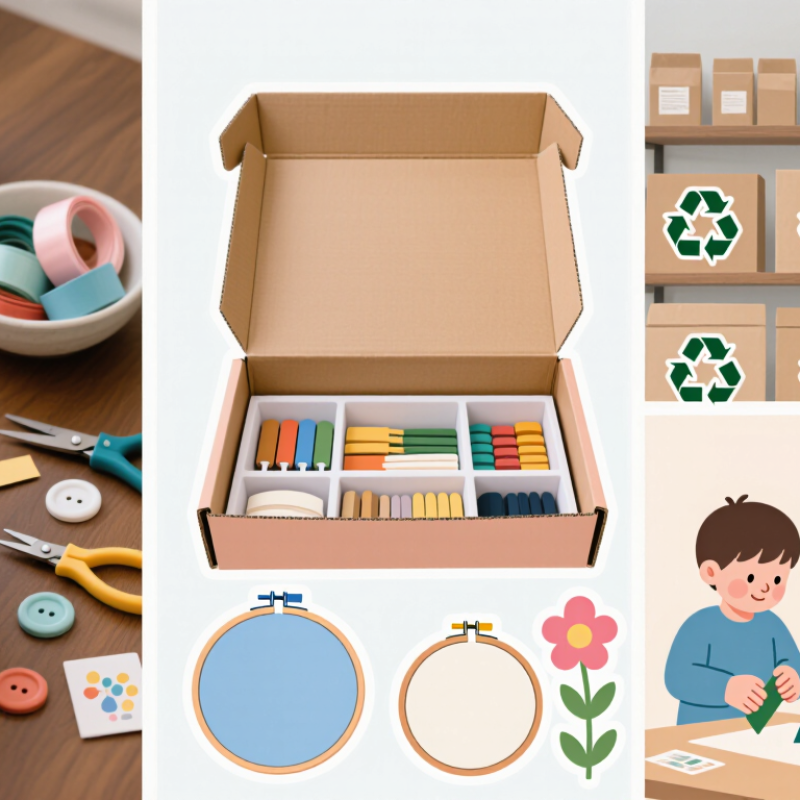
Customized DIY craft kits are pre-planned creative experiences built around a specific audience, event, or campaign. They usually combine selected materials, visual instructions, packaging, and a finished-product goal. Customization may include colors, difficulty, cultural themes, printed messages, or reusable tools. It is more than adding a logo to a box.
For example, a kit might contain measured yarn, a wooden frame, safe glue, and a card showing each step. The contents should feel intentional. Missing pieces quickly damage trust. Grand View Research estimated the global arts and crafts market at about USD 44.3 billion in 2023, with continued growth expected through 2030. Research and Markets also identifies personalization and online purchasing as important forces in the DIY craft sector. These findings suggest that buyers increasingly value convenient, meaningful activities, not random supplies.
In practice, customization begins with user testing. Can a beginner finish the project in 45 minutes? Are the instructions readable under warm indoor light? I once underestimated drying time; the finished craft looked rushed. That mistake matters. A reliable kit should list skill level, project duration, material quantities, and basic safety guidance. Accessible design also helps, such as larger print, color-independent instructions, and easy-open packaging. The strongest kits make the recipient feel capable, while leaving enough creative space for personal choices.
How Brand-Specific Craft Kits Are Designed
Why Customize DIY Craft Kits for Your Brand?
How Brand-Specific Craft Kits Are Designed
A brand-specific DIY craft kit begins with a clear user profile, not a logo. Designers study age, skill level, interests, and the setting where the kit will be used. A family kit needs larger pieces and simpler steps. An adult workshop can support finer tools and more complex techniques. The design should also reflect the brand’s tone through colors, textures, packaging, and storytelling. Small details matter.
The 2024 market analysis from Grand View Research estimated the global arts and crafts market at more than 40 billion dollars in 2023. That growth creates opportunity, but it also raises expectations for quality. Designers usually build a low-cost prototype first. They test opening, sorting, assembly, and cleanup with real users. The first version may fail.
That failure is useful.
Instruction sheets should use short sentences, numbered visuals, and clear warnings. Materials need documented sourcing, consistent sizing, and appropriate safety checks. A 2020 global consumer study of more than 18,000 people found that nearly eight in ten consumers considered sustainability important, while 57% were willing to change purchasing habits. Recycled packaging, limited plastic, and reusable storage can support that expectation. Still, sustainability claims must match verified material data. A paper sleeve is not automatically sustainable if the components remain wasteful. Designers should measure completion rates, damaged parts, customer questions, and repeat use before final production.
Why Customize DIY Craft Kits for Your Brand?
How Brand-Specific Craft Kits Are Designed: personalization can improve relevance, purchase intent, and customer satisfaction. These cross-industry research findings help explain why a customized kit can be more compelling than a generic one.
Sources: Epsilon, “The New Epsilon X Data”; McKinsey & Company, “The value of getting personalization right—or wrong”; Deloitte, “Made-to-order: The rise of mass personalization.” Figures represent reported consumer percentages from separate studies and are not brand-specific performance data.
Which Materials and Packaging Support Your Brand?
Why Customize DIY Craft Kits for Your Brand?
Material selection shapes both the crafting experience and the customer’s trust. Choose sturdy recycled cardboard for instruction cards, trays, and outer cartons. FSC-certified paper can strengthen sourcing credibility when certification is properly documented. Water-based inks reduce strong odors around children and hobby users. However, “eco-friendly” is not automatic. A paper box with excessive inserts may create more waste than expected. Smithers projects the global packaging market will exceed 1.2 trillion US dollars by 2028, increasing pressure for efficient material choices. The scale is enormous. Small design decisions matter.
Packaging should protect components without making unboxing frustrating. Use a right-sized carton, paper bands, molded-pulp holders, and recyclable tissue where suitable. Avoid loose plastic sachets when a sealed paper alternative can protect the contents safely. The IBM Institute for Business Value reported that nearly six in ten consumers would change shopping habits to reduce environmental impact. Still, sustainability claims need evidence. Suppliers should provide recycled-content data, certification records, and safety documentation for paints, adhesives, and small parts. Testing is not glamorous, but it prevents expensive revisions.
Tips: Prototype three box sizes before ordering in bulk. Measure empty space after shipping tests. Print disposal guidance inside the lid. Ask whether every insert earns its place. Our own early mockups looked polished but used too much filler. That mistake exposed a useful lesson: attractive packaging is not always responsible packaging. Pricing, durability, accessibility, and recycling infrastructure may conflict. Review those trade-offs honestly.
How Custom Kits Strengthen Customer Engagement
Why Customize DIY Craft Kits for Your Brand?
How Custom Kits Strengthen Customer Engagement
A customized DIY craft kit gives customers a reason to participate, not just receive. They choose colors, materials, difficulty levels, or a personal message card. Each decision creates a small emotional investment. McKinsey’s 2021 personalization research found that 71% of consumers expect personalized interactions. It also reported that 76% feel frustrated when personalization is missing. A thoughtful kit answers that expectation through hands-on experience.
Engagement becomes more visible during the activity. Customers may scan a tutorial, share a finished piece, or discuss a difficult step with others. A 2023 report from the Content Marketing Institute showed that 73% of successful marketers prioritize audience needs when creating content. Custom kits apply that principle physically. The instruction card can reflect a customer group’s skill level, season, or local interests. Keep it simple. Too many options can slow the experience.
Practical testing matters. In small workshop trials, observe where people pause, spill materials, or abandon steps. Then revise the kit. Not every customer wants a perfect result. Some prefer room for mistakes. That detail can strengthen trust, although it may reduce visual consistency. Clear safety guidance, durable packaging, and honest material descriptions also support reliability. The kit should feel personal before opening, and achievable after the first ten minutes.
Why Customize DIY Craft Kits for Your Brand? - How Custom Kits Strengthen Customer Engagement
| Engagement Dimension |
Evidence-Based Consumer Insight |
Relevant Data |
How a Customized DIY Kit Helps |
Recommended KPI |
| Personalization |
Consumers increasingly expect interactions and offers that reflect their interests and needs. |
71% expect personalization; 76% feel frustrated when it is absent. |
Use tailored themes, selectable materials, personalized instruction cards, or activity levels suited to different customer segments. |
Personalized-kit selection rate; repeat purchase rate; post-purchase satisfaction score. |
| Purchase Intent |
Relevant and individualized experiences are associated with stronger purchase consideration. |
80% of surveyed consumers reported being more likely to purchase when experiences are personalized. |
Connect the kit’s colors, project style, or difficulty level with a specific customer need or occasion. |
Kit conversion rate; add-to-cart rate; checkout completion rate. |
| Memorable Experience |
Experiential purchases can create stronger emotional involvement than purely functional transactions. |
78% of surveyed adults preferred spending on a desirable experience rather than a material item. |
Turn the product into an activity with a clear beginning, creative process, finished result, and optional sharing moment. |
Completion rate; average session time; experience rating. |
| User-Generated Content |
Customer-created photos and videos can provide social proof and demonstrate how a product is used. |
79% of surveyed consumers said user-generated content strongly influences purchasing decisions. |
Include a shareable final result, project instructions, and a simple invitation to post completed work. |
Content submission rate; tagged-post volume; engagement per customer-created post. |
| Trust and Advocacy |
Recommendations from personal contacts remain one of the most trusted forms of consumer guidance. |
83% of surveyed respondents trusted recommendations from people they knew. |
Design kits for shared activities, gifting, workshops, or family projects that naturally encourage referrals. |
Referral rate; recommendation score; customer review volume. |
| Retention and Repeat Engagement |
A consistent, relevant experience gives customers a reason to return and explore related products. |
Track changes against a non-customized control group rather than relying on a universal benchmark. |
Offer seasonal themes, progressive skill levels, refill packs, and complementary project formats. |
30-, 60-, and 90-day repeat purchase rate; subscription retention; customer lifetime value. |
| Learning and Product Improvement |
Customer choices and project feedback can reveal which designs, materials, and difficulty levels are most relevant. |
Use observed customer behavior and statistically comparable test groups to establish reliable results. |
Collect preferences through kit selection, QR-code surveys, completion feedback, and optional skill-level questions. |
Feedback response rate; material preference distribution; project difficulty satisfaction; test-group uplift. |
|
Source notes:
Findings are drawn from widely cited consumer research on personalization, experiential spending, user-generated content, and recommendations. Percentages reflect survey results and should be used as directional benchmarks rather than guaranteed outcomes. For a reliable brand-specific result, compare customized and standard kits using the same audience, price, channel, and measurement period.
|
How to Evaluate the Success of a Branded Craft Kit
Why Customize DIY Craft Kits for Your Brand?
How to Evaluate the Success of a Branded Craft Kit
A successful branded craft kit should create more than a finished object. It should encourage participation, conversation, and a clear memory of the experience. In workshop projects I have reviewed, completion rate was the most useful starting point. Count how many kits were opened, started, and finished. These numbers reveal where instructions, materials, or difficulty may have failed.
Ask participants short, specific questions after the activity. Did the steps feel clear? Which material felt frustrating? Would they make another kit at home? Combine survey answers with practical evidence, such as completed projects, event photos, and repeat participation. A high satisfaction score means little if many kits remain unopened. It may also hide polite feedback.
Measure cost carefully. Include packaging, assembly time, shipping, support, and unused materials. Compare these costs with engagement, qualified inquiries, or internal participation goals. Set a baseline before distribution, then review results after one week and one month. Our first survey was too optimistic. People liked the appearance, but several struggled with one small fastening step. That detail changed the next version. Some data will remain messy. Record the weakness honestly, explain the likely cause, and test one improvement at a time. Reliable evaluation depends on evidence, not enthusiasm alone.
FAQS
It is a planned creative activity for a specific audience or event. It may include measured materials, visual instructions, and a finished-product goal. It is more than a decorated box.
Customization can include colors, difficulty, cultural themes, messages, and reusable tools. You might choose blue yarn, larger print, or a beginner-friendly project. Keep choices manageable.
Every required material should be included and clearly measured. A small kit might contain yarn, a wooden frame, safe glue, and an instruction card. Missing pieces quickly damage trust.
A practical target is about 45 minutes. The instructions should explain the skill level and expected duration. Drying time also matters. I once underestimated it.
Use clear pictures, short steps, and readable text. Instructions should remain visible under warm indoor light. Color-independent symbols can help people distinguish steps.
Participants make choices instead of simply receiving a package. They may select colors, materials, or a personal message card. Small decisions create emotional investment.
Watch beginners complete the project in a small workshop. Notice pauses, spills, confusing steps, and unfinished pieces. Then revise the contents. Testing may reveal awkward assumptions.
Not necessarily. Some participants prefer creative freedom and acceptable imperfections. A less uniform result can feel more personal. However, too much freedom may create confusion.
Conclusion
Customized DIY craft kits are creative project packages designed around a company’s identity, audience, and goals. Learning how to customize DIY craft kits for your brand begins with defining the desired experience, skill level, theme, and visual style. The kit can then be developed with carefully selected materials, clear instructions, coordinated colors, and packaging that communicates the intended message while remaining practical, attractive, and easy to use.
A well-designed branded craft kit can make customer interactions more memorable by encouraging participation rather than passive viewing. Personalization, seasonal themes, and thoughtful project choices may increase interest, emotional connection, and sharing. To evaluate success, consider customer feedback, completion rates, repeat interest, engagement with related content, and overall satisfaction. Comparing these results with the original objectives helps determine which elements worked well and which materials, instructions, or packaging details should be improved in future versions.

 JKit Toys